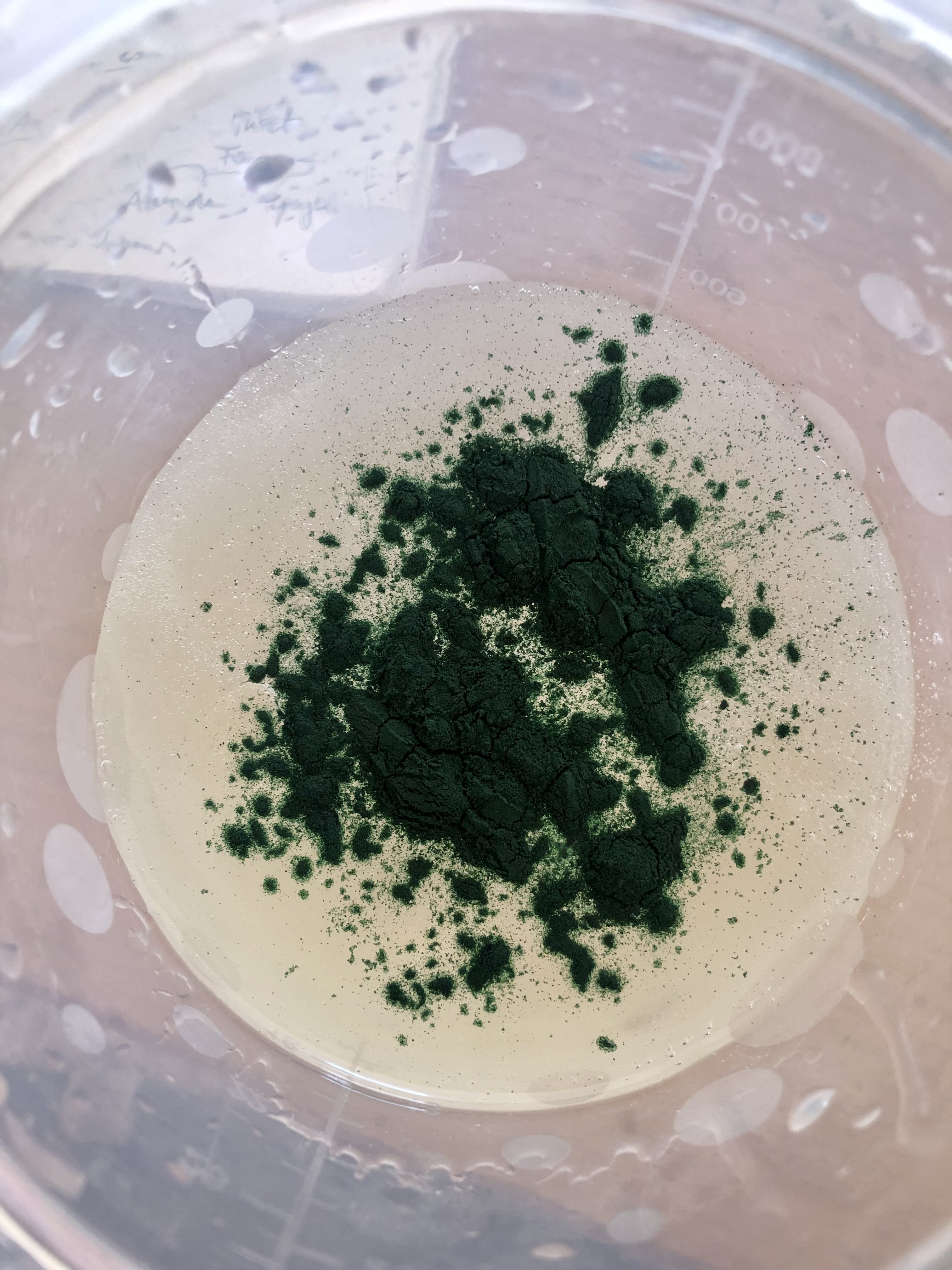
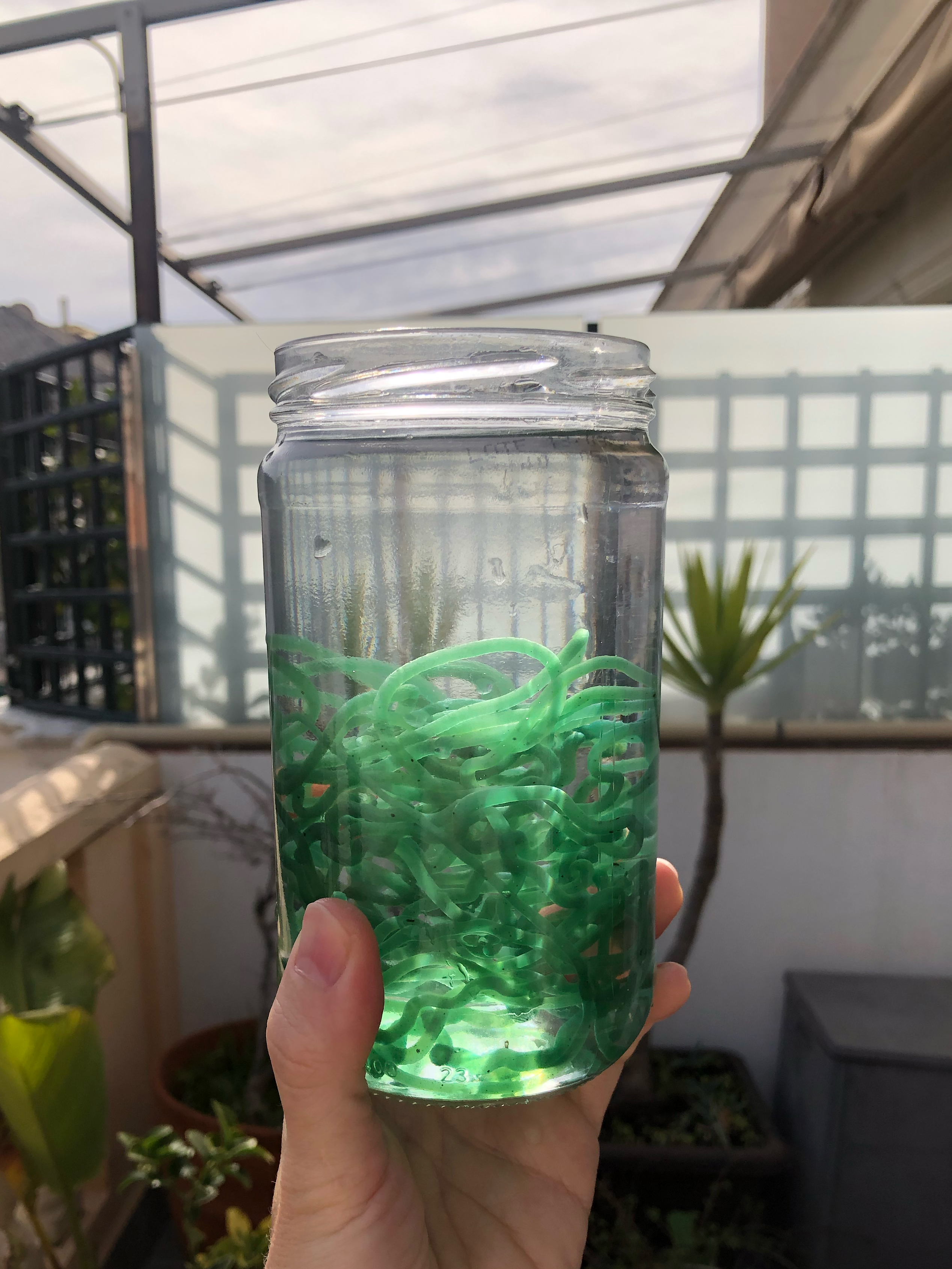
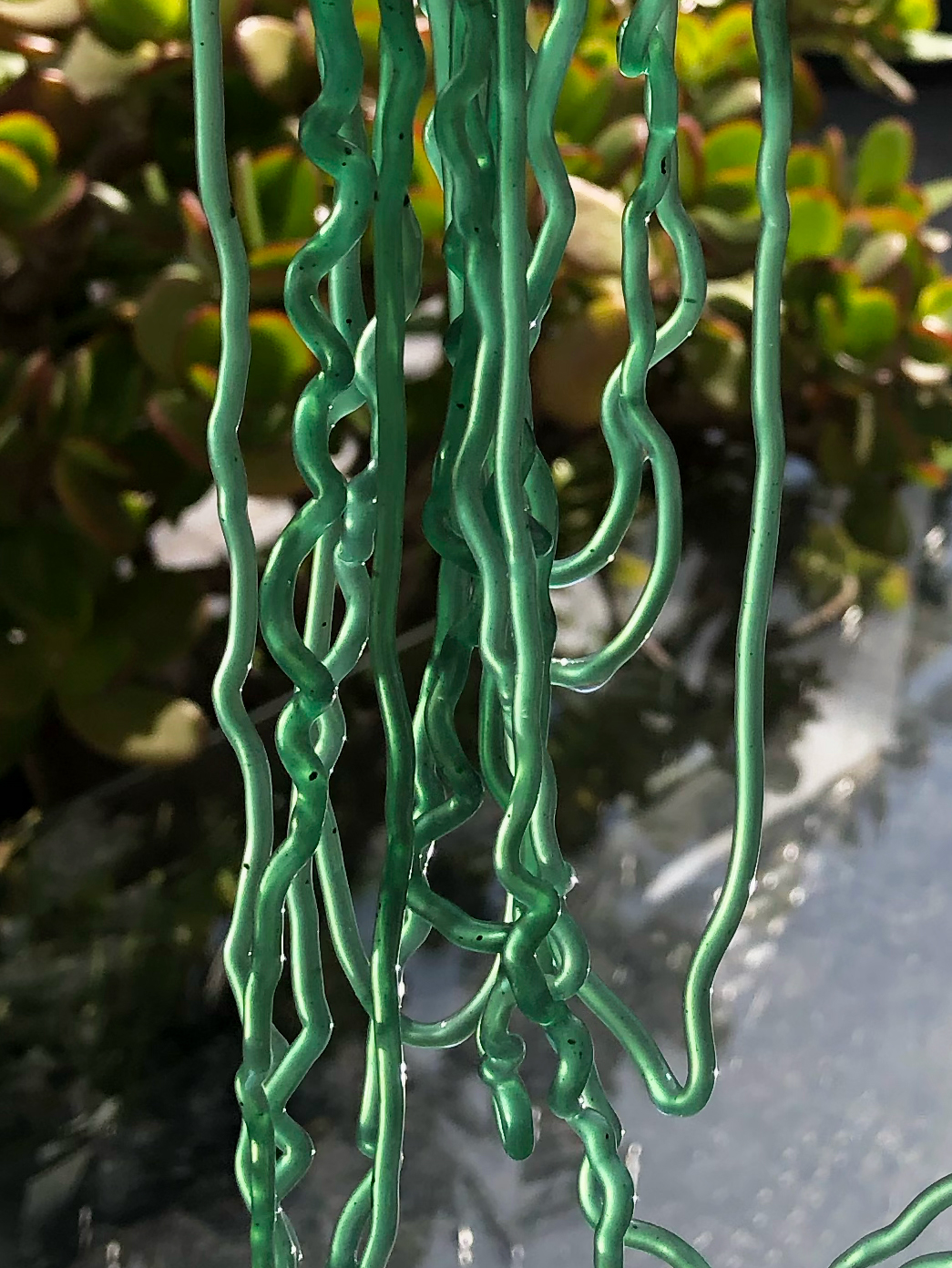
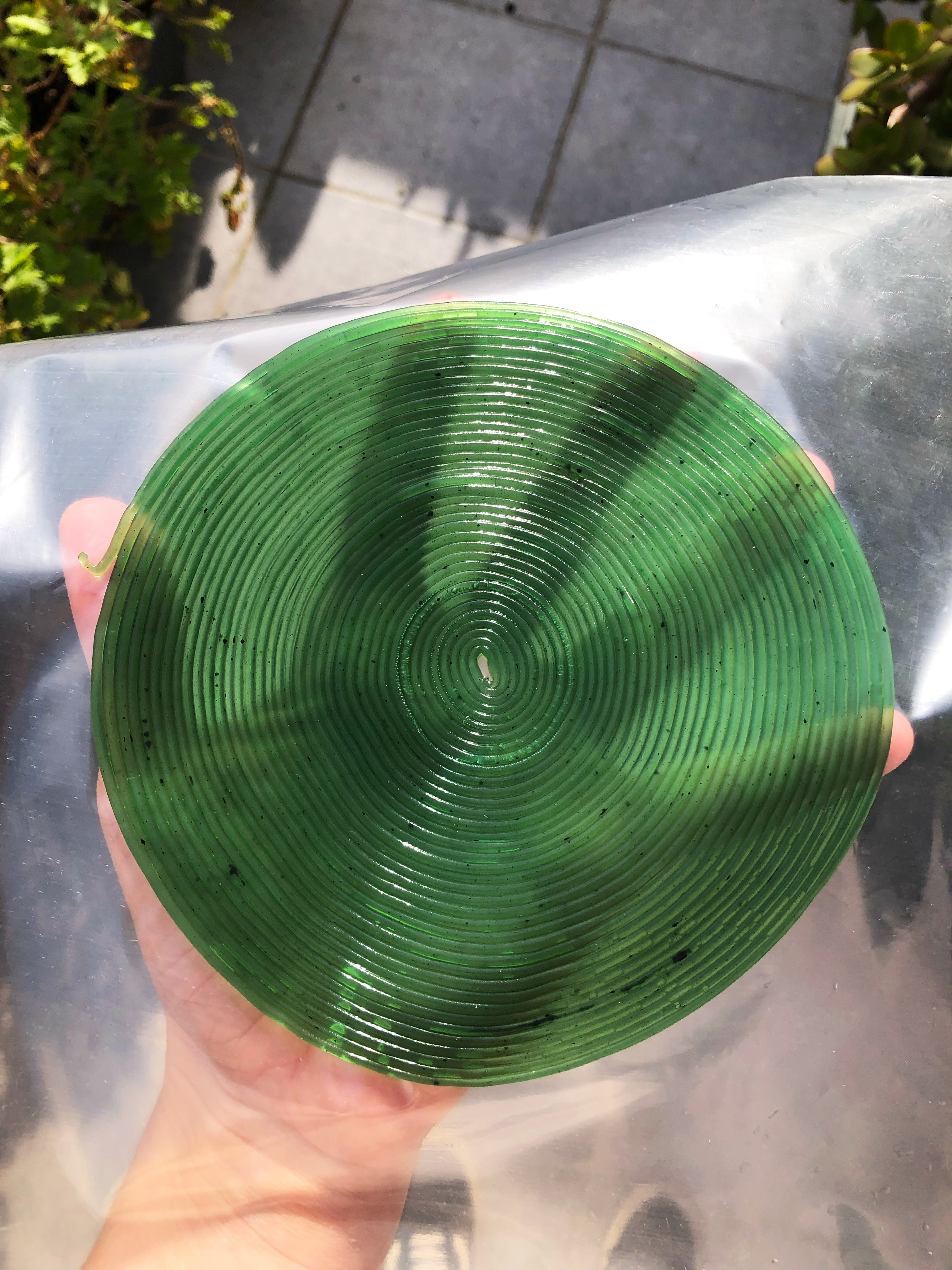
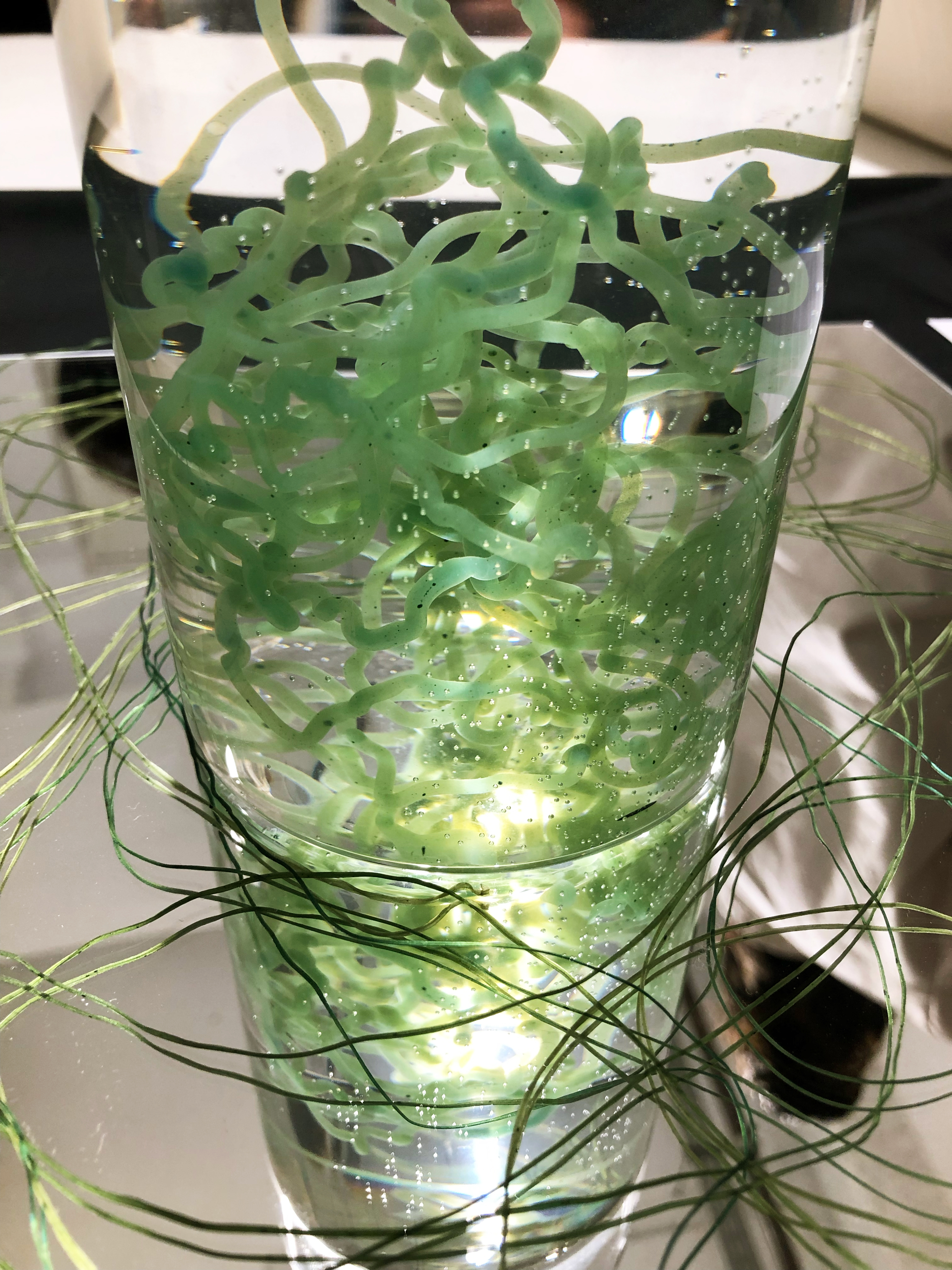
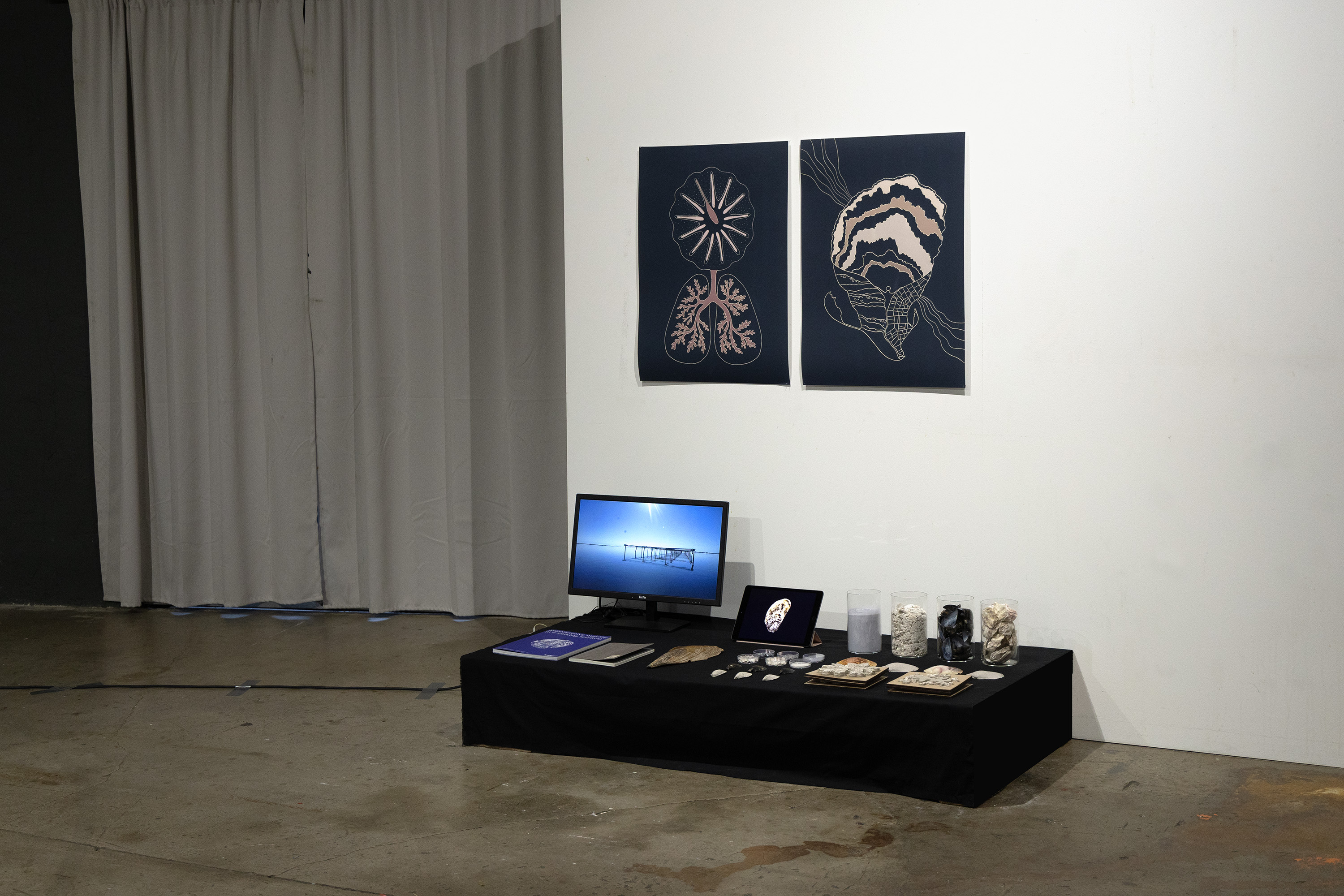
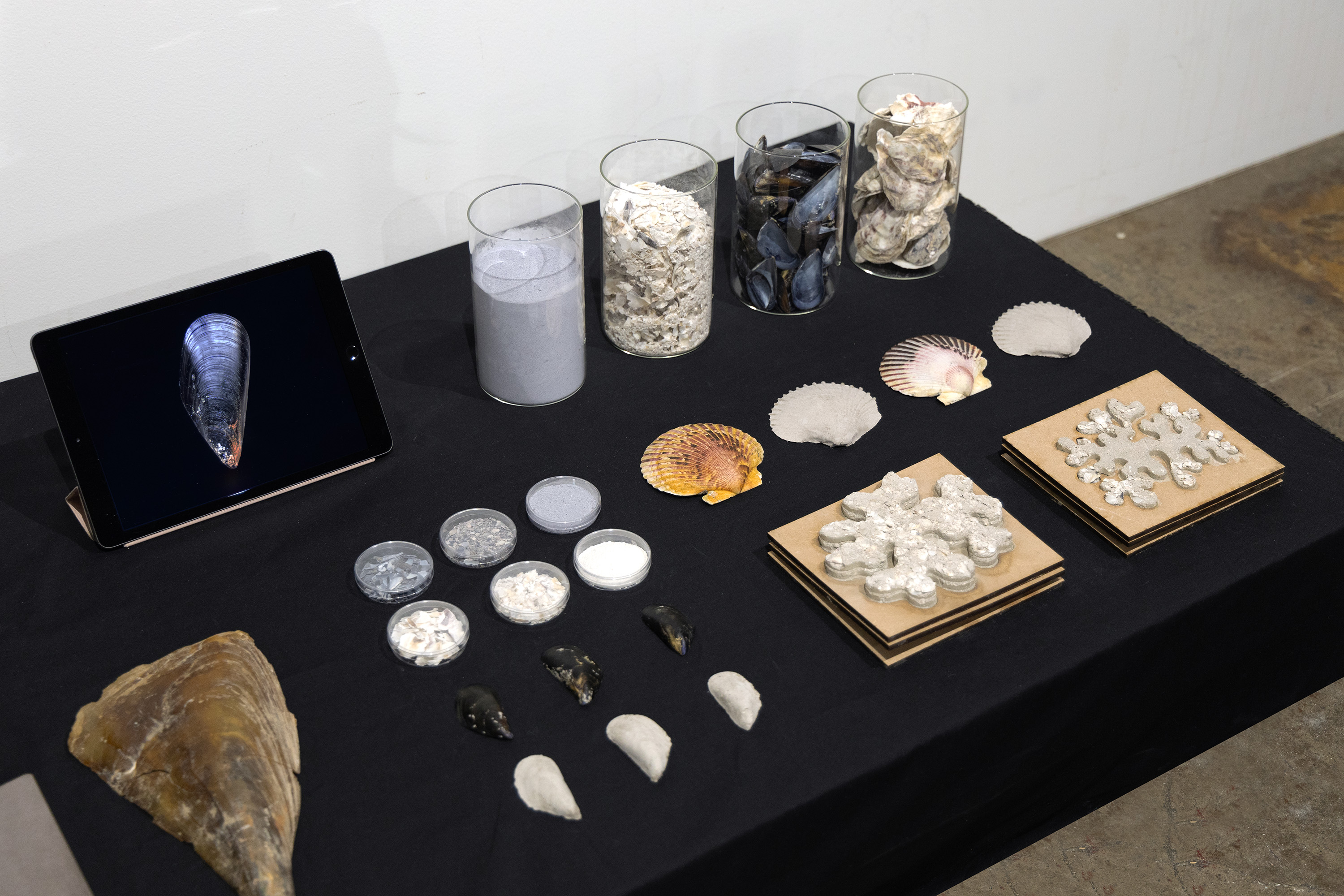
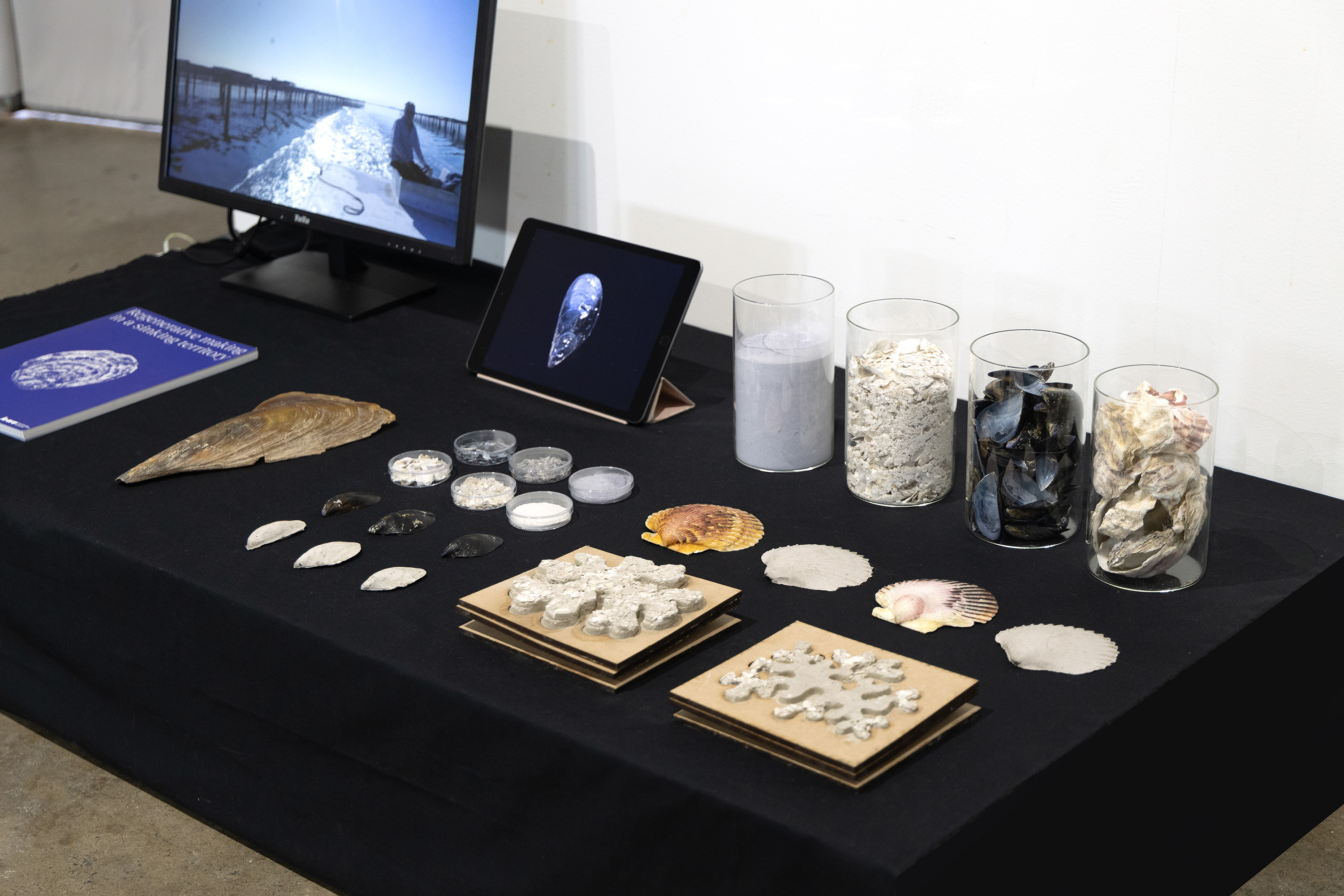
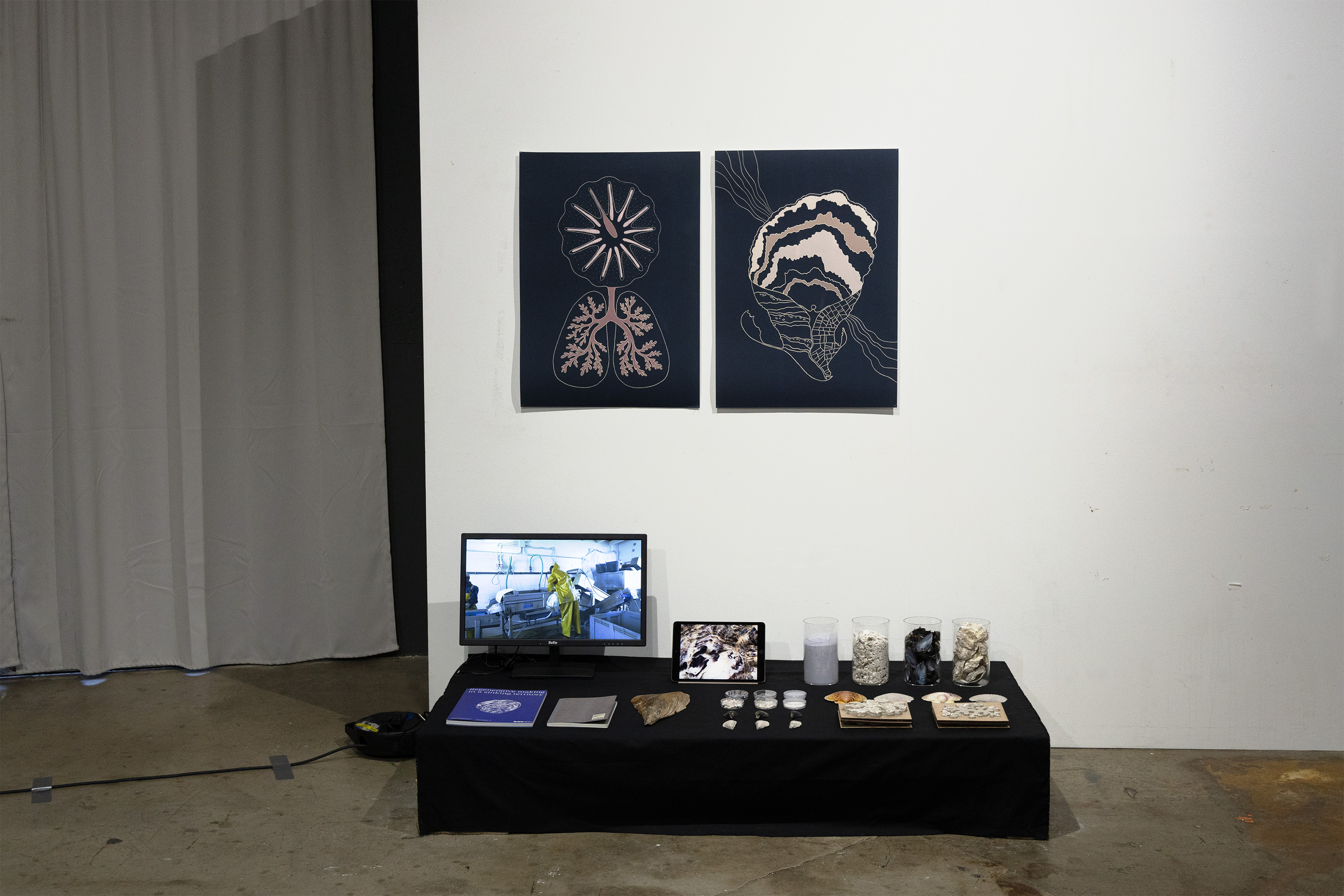
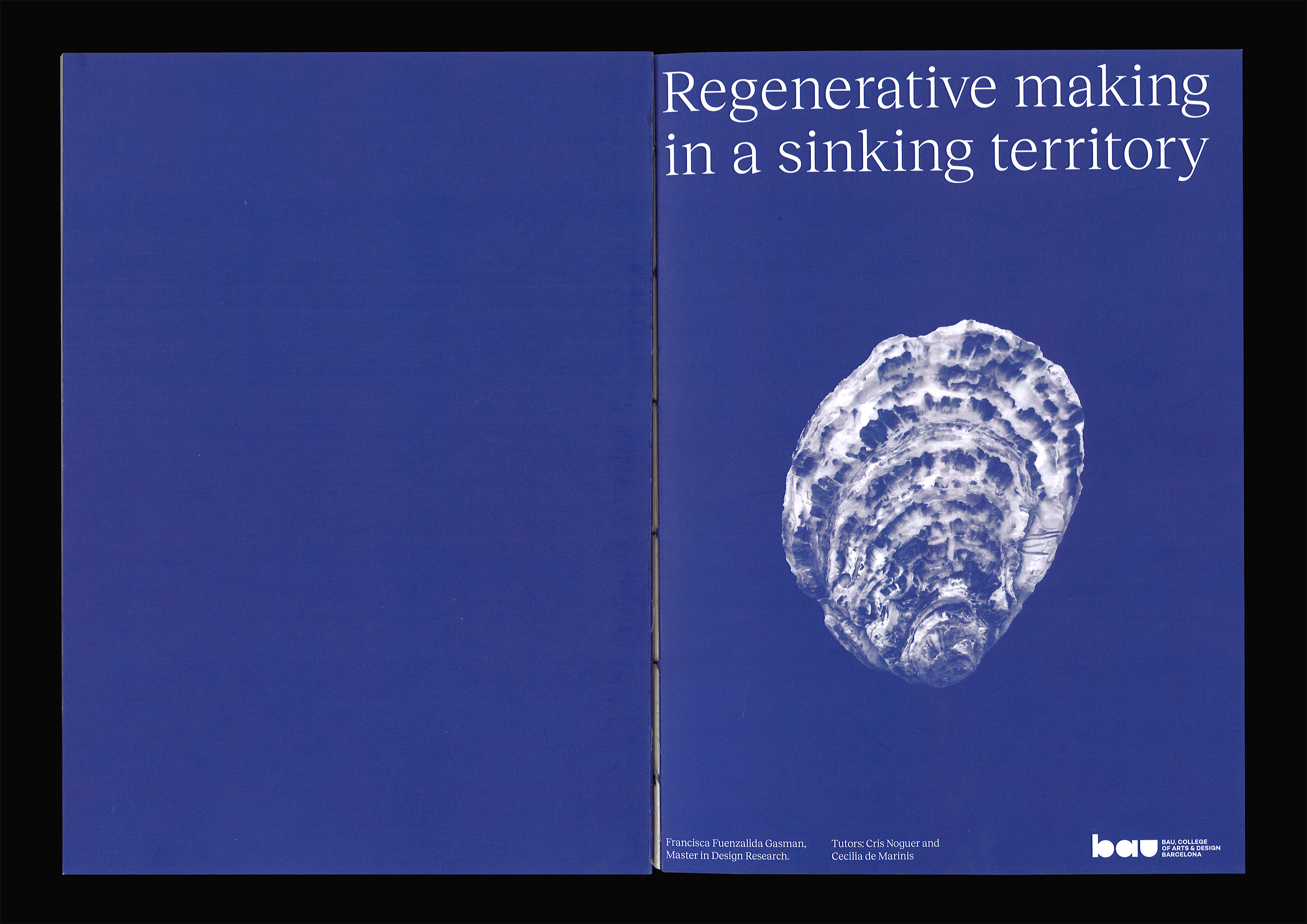
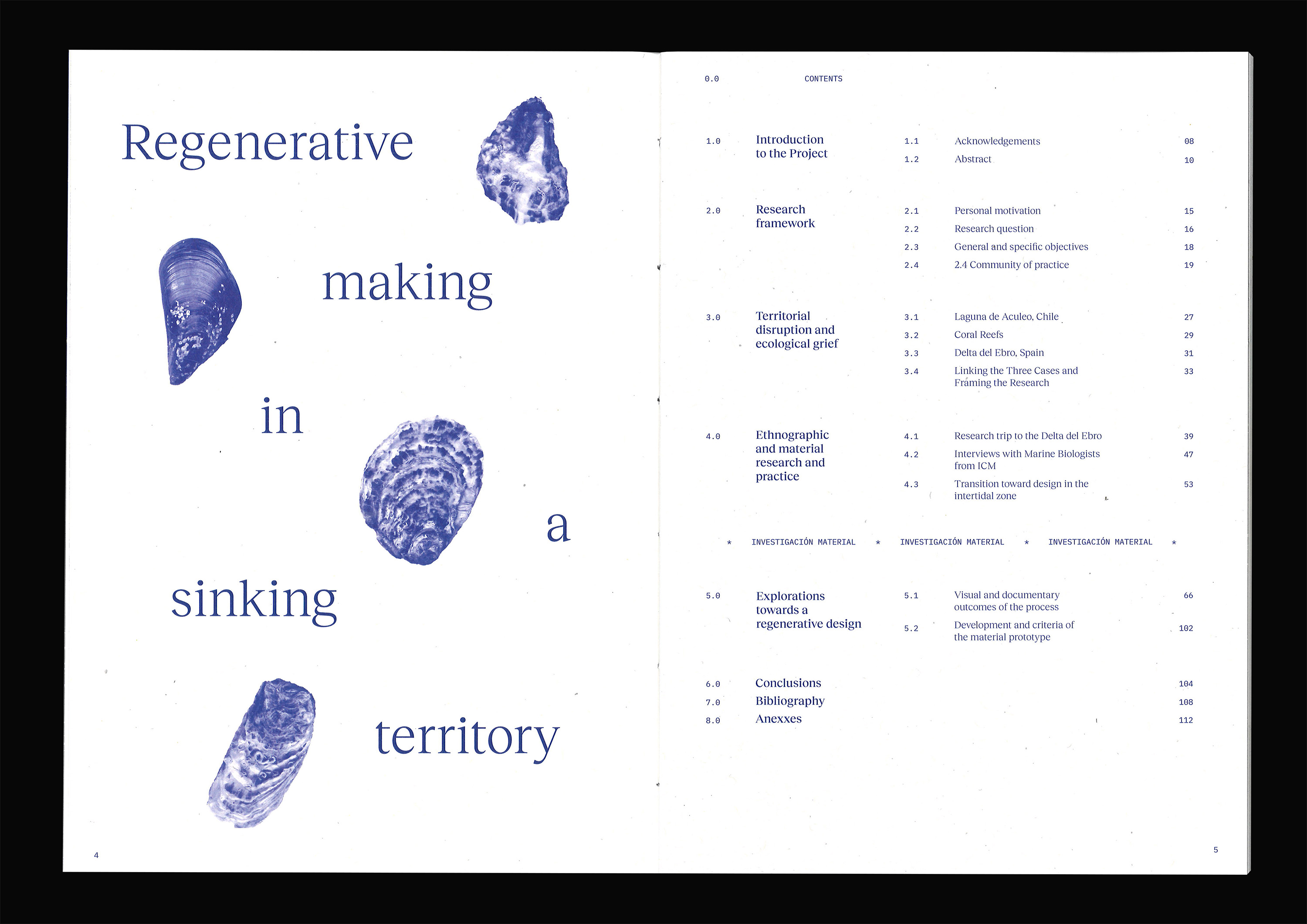
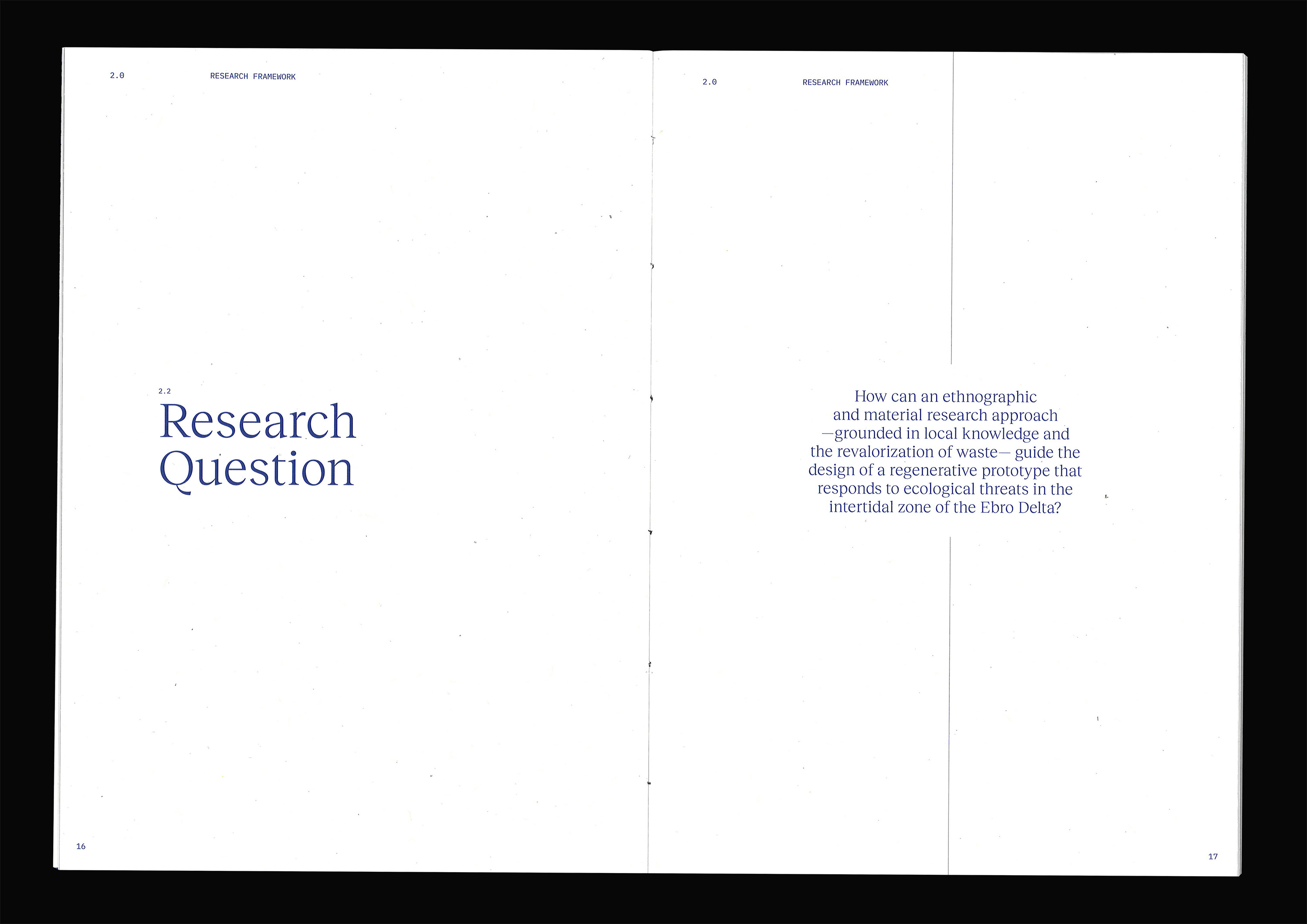
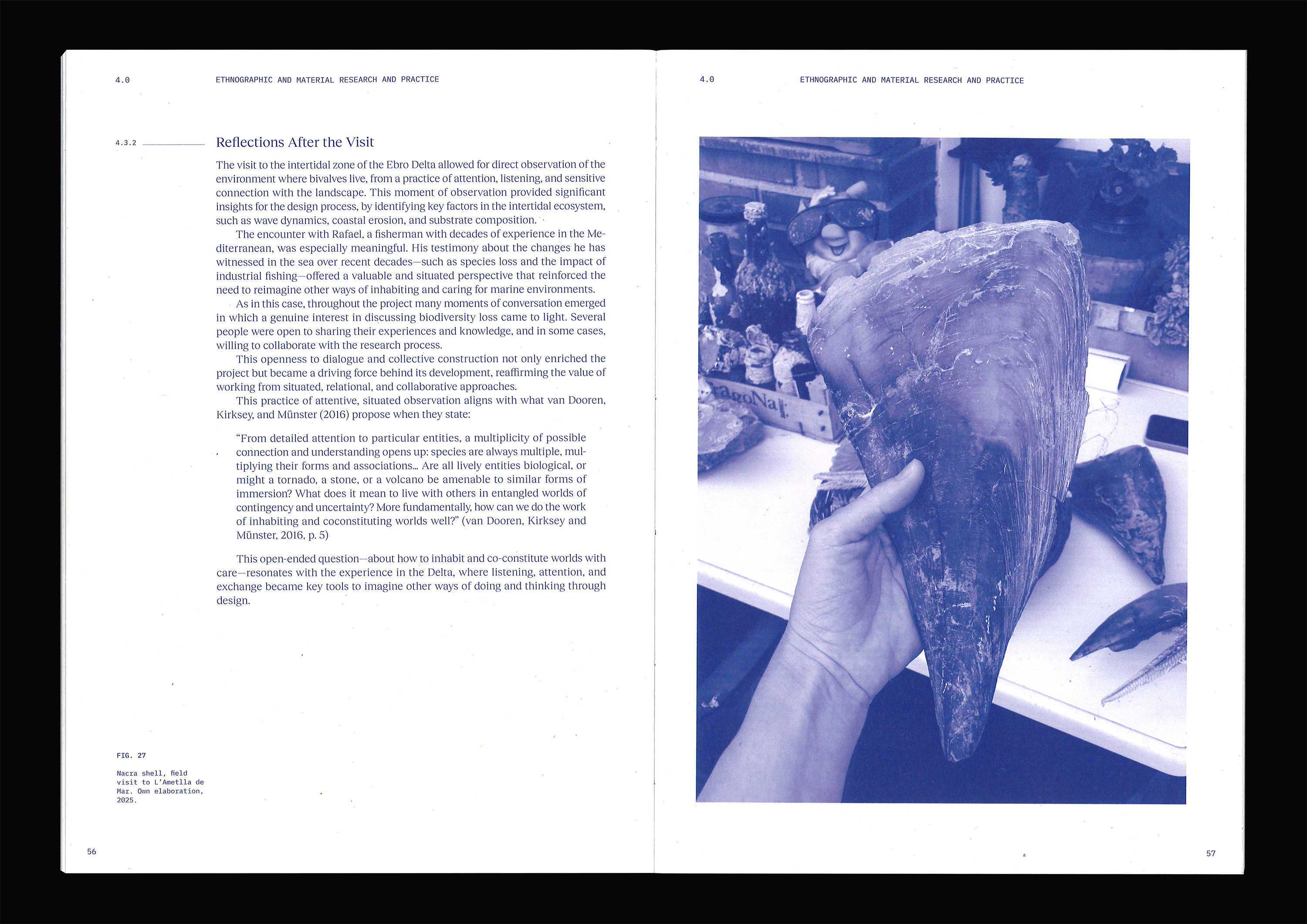
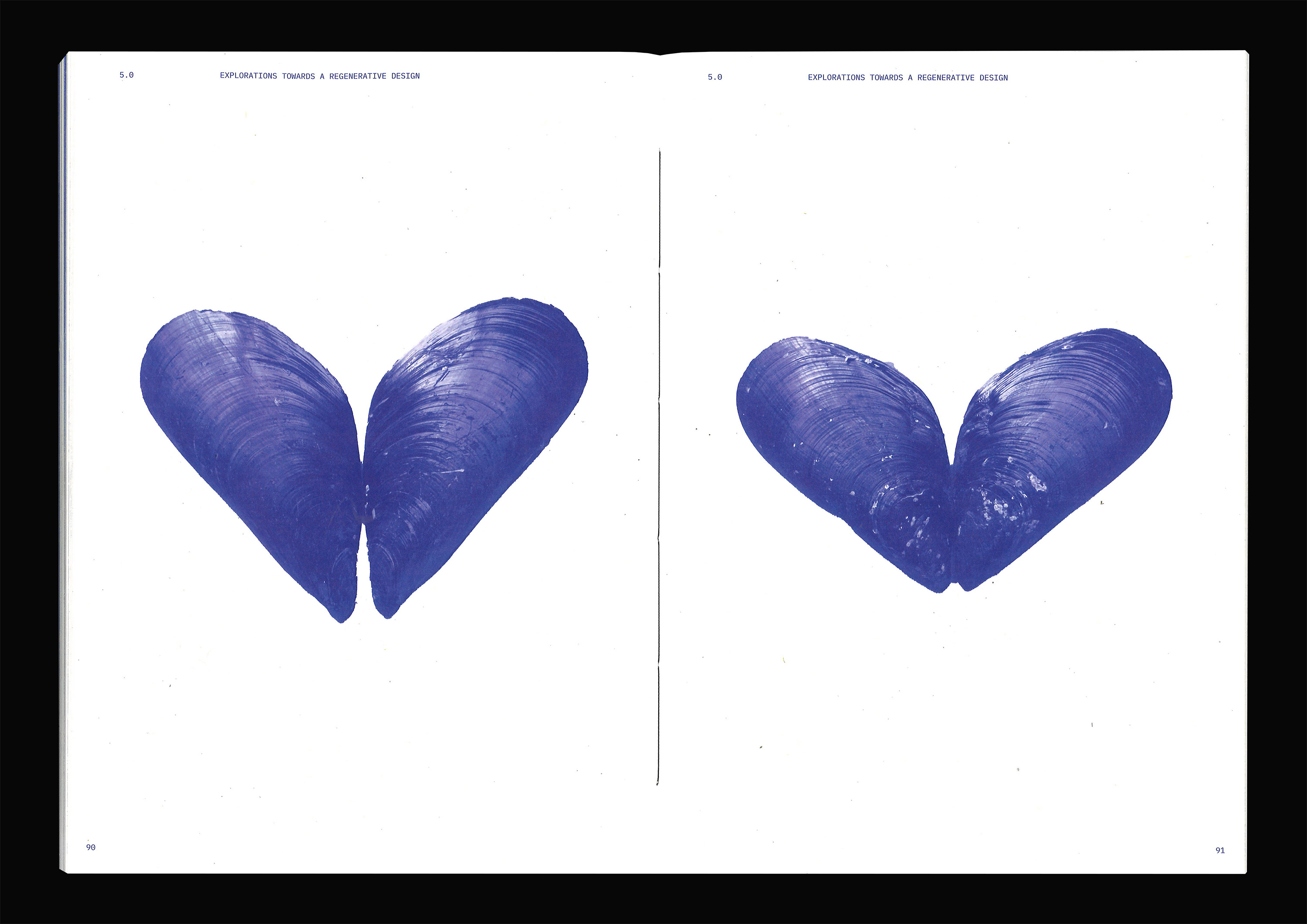
This project explores how an ethnographic and material research approach—grounded in local knowledge, an understanding of the ecosystemic role of mollusks, and the revalorization of waste—can guide the design of a regenerative prototype that responds to ecological threats in the intertidal zone of the Ebro Delta. This territory is under threat due to sediment loss, sea level rise, and increasing water temperatures. In response to environmental degradation and biodiversity loss in this coastal ecosystem, the research is structured around two complementary methodological axes.
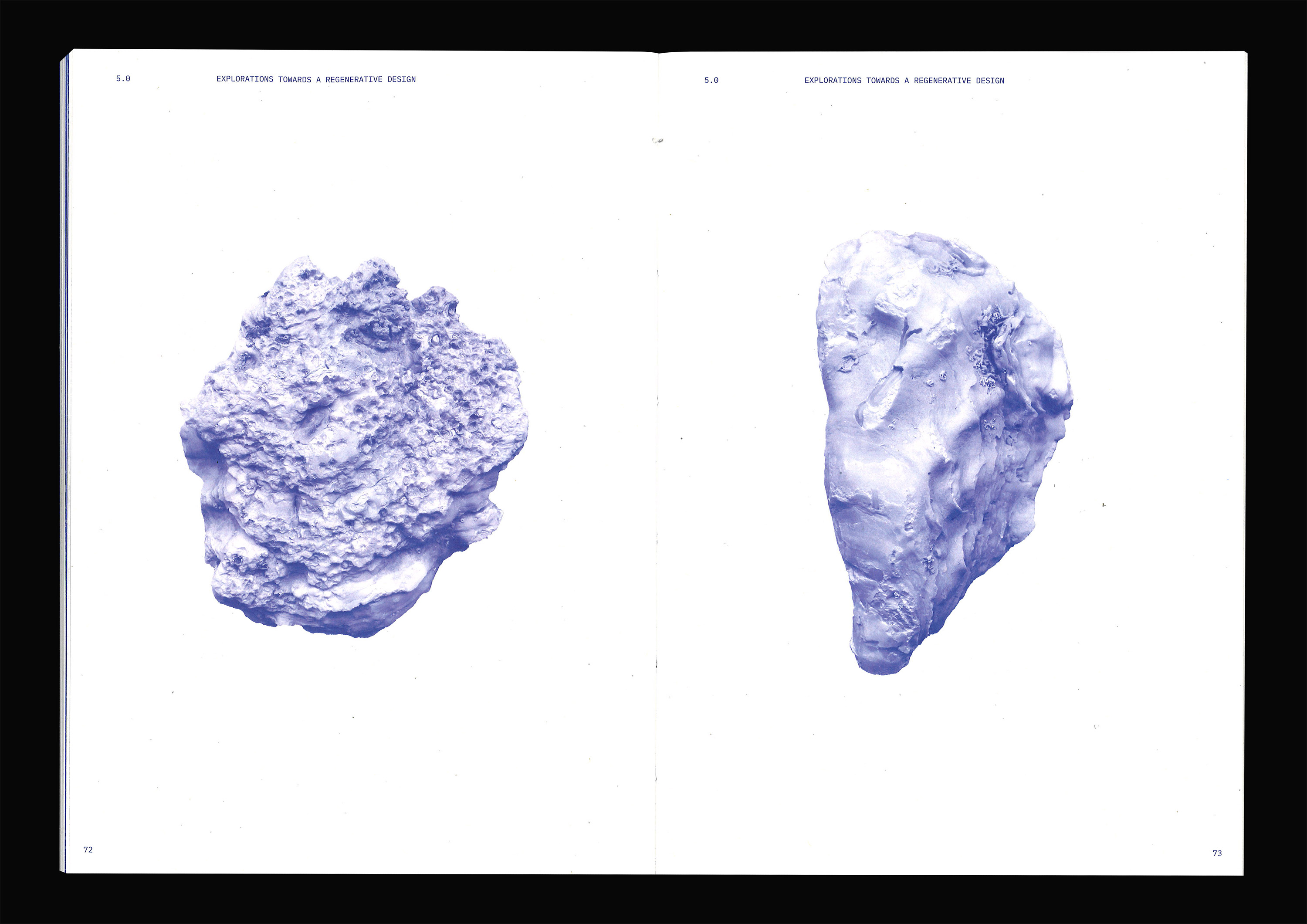
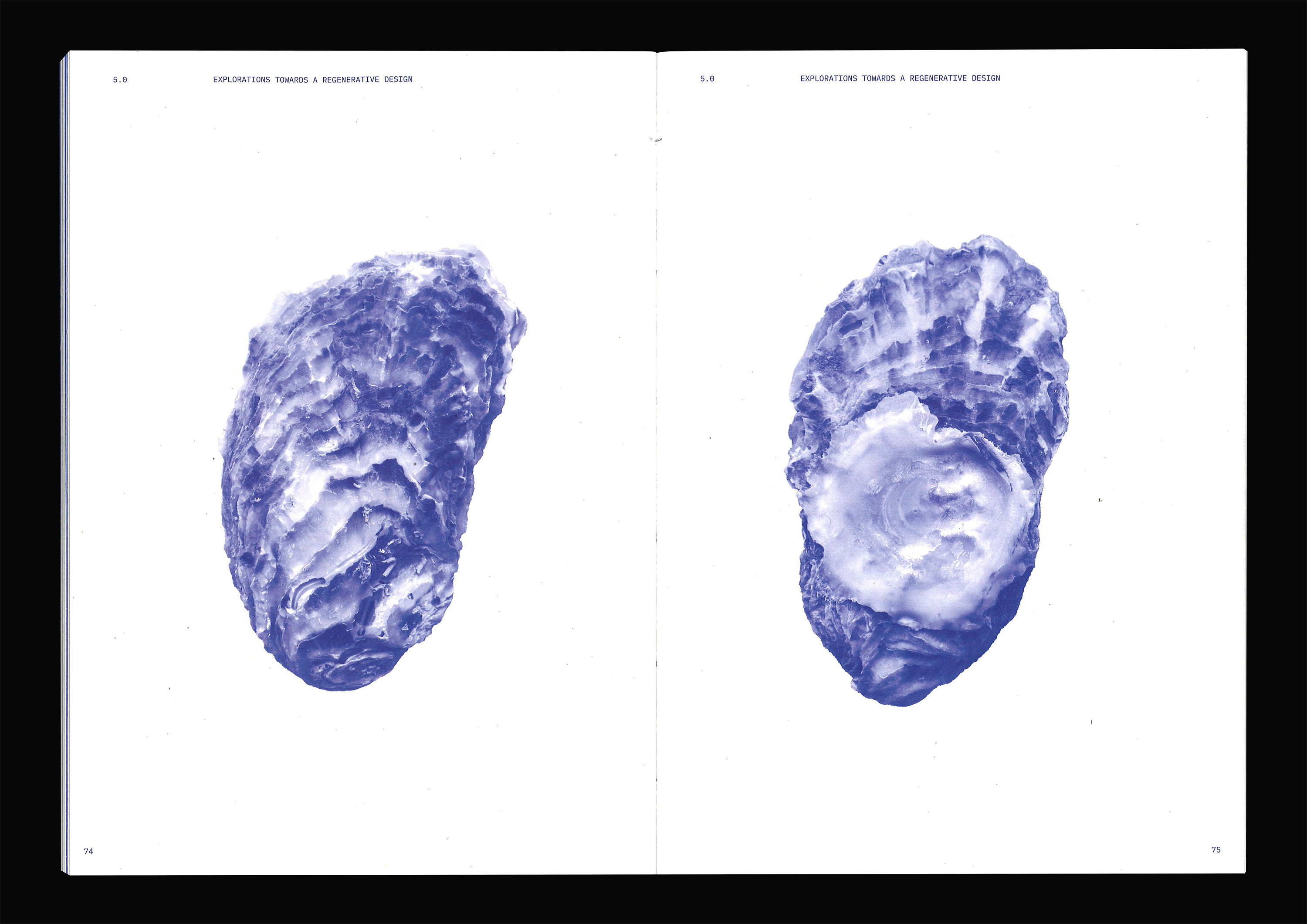
On the one hand, an ethnographic approach aimed at building relational networks with local communities and their knowledge, as well as with the marine organisms of the delta; and on the other hand, a material exploration of the potential for revalorizing mollusk shell waste generated in the region as a basis for regenerative design, taking into account both habitat and the key role mollusks play in the ecosystem.
Through an interdisciplinary lens and a situated, sensitive approach, this research seeks to articulate human and more-than-human knowledges in order to develop a preliminary proposal oriented toward the regeneration of marine life in this fragile territory. This initial approximation, grounded in active engagement, lays the foundation for long-term development, open to future iterations that integrate design, ecology, and a collaborative perspective in environmental regeneration processes.
On the one hand, an ethnographic approach aimed at building relational networks with local communities and their knowledge, as well as with the marine organisms of the delta; and on the other hand, a material exploration of the potential for revalorizing mollusk shell waste generated in the region as a basis for regenerative design, taking into account both habitat and the key role mollusks play in the ecosystem.
Through an interdisciplinary lens and a situated, sensitive approach, this research seeks to articulate human and more-than-human knowledges in order to develop a preliminary proposal oriented toward the regeneration of marine life in this fragile territory. This initial approximation, grounded in active engagement, lays the foundation for long-term development, open to future iterations that integrate design, ecology, and a collaborative perspective in environmental regeneration processes.




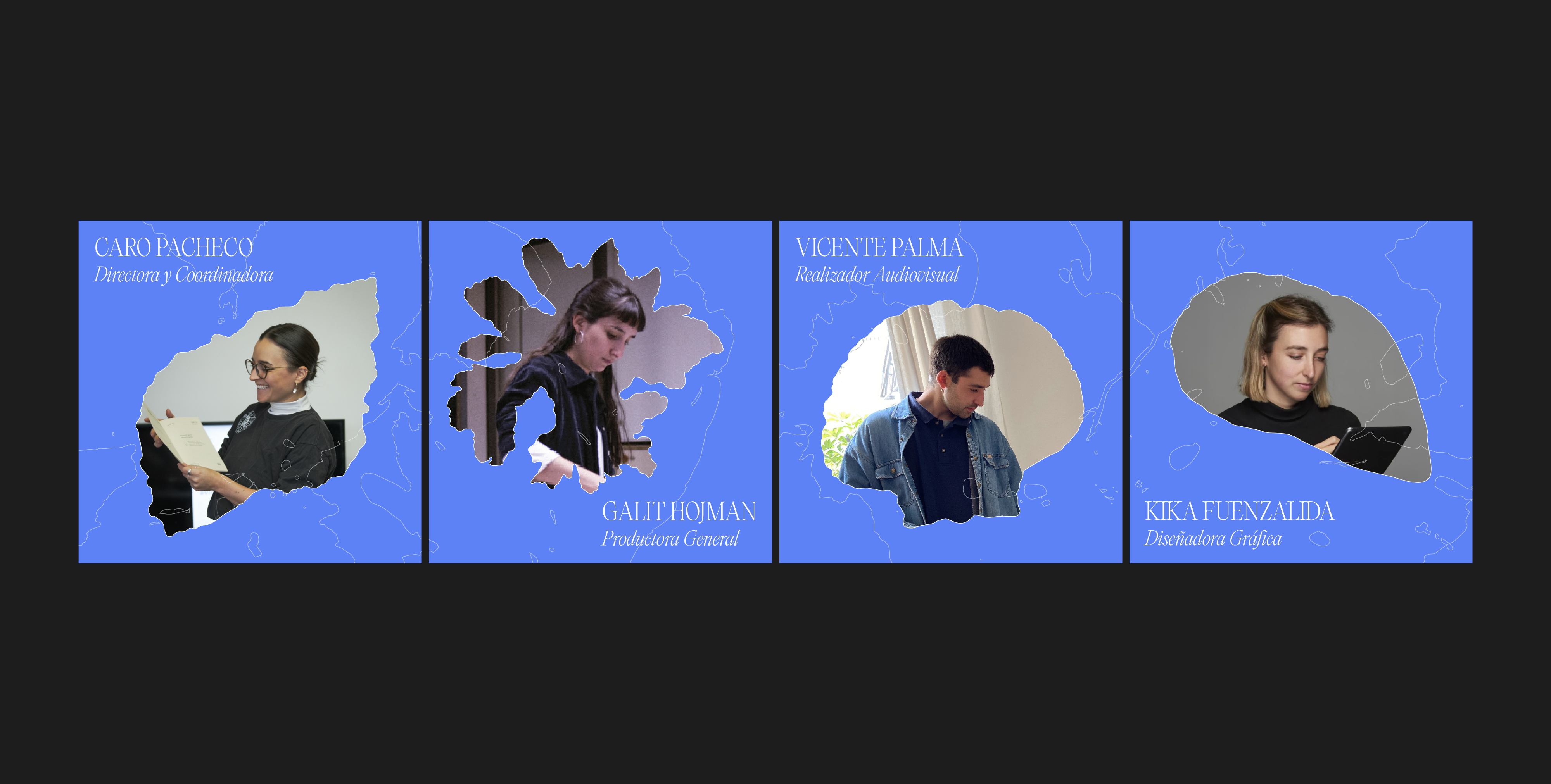
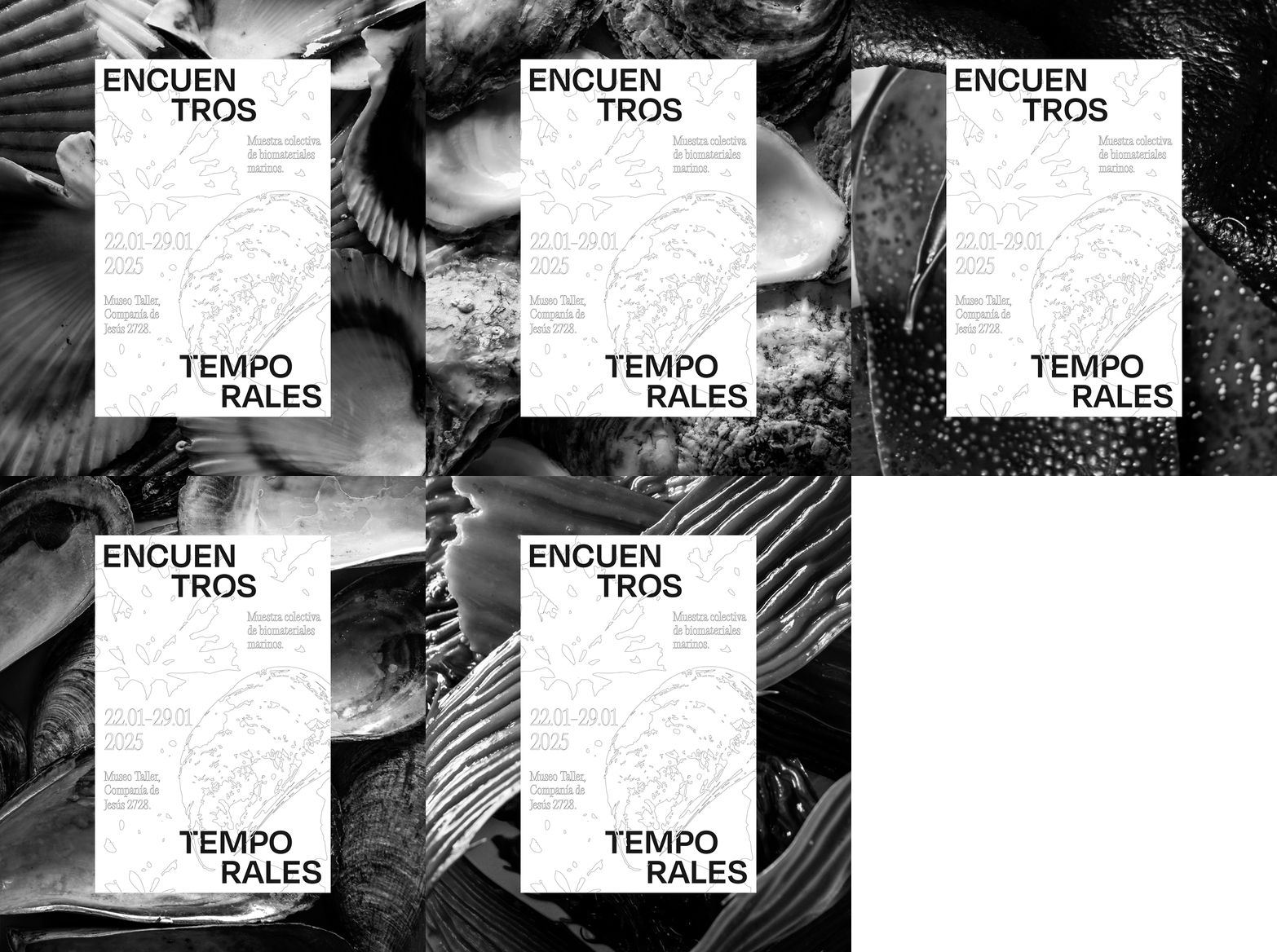
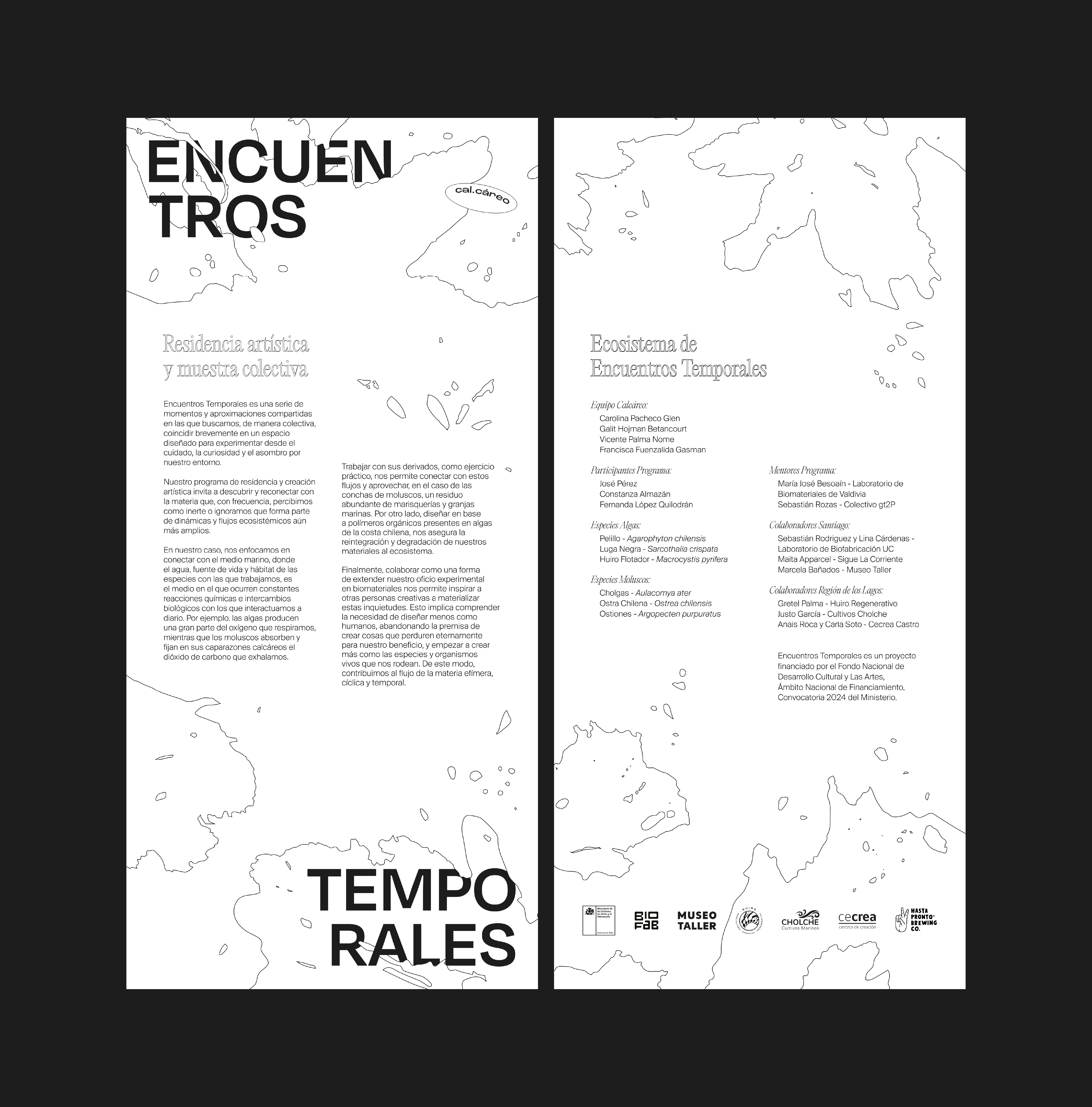
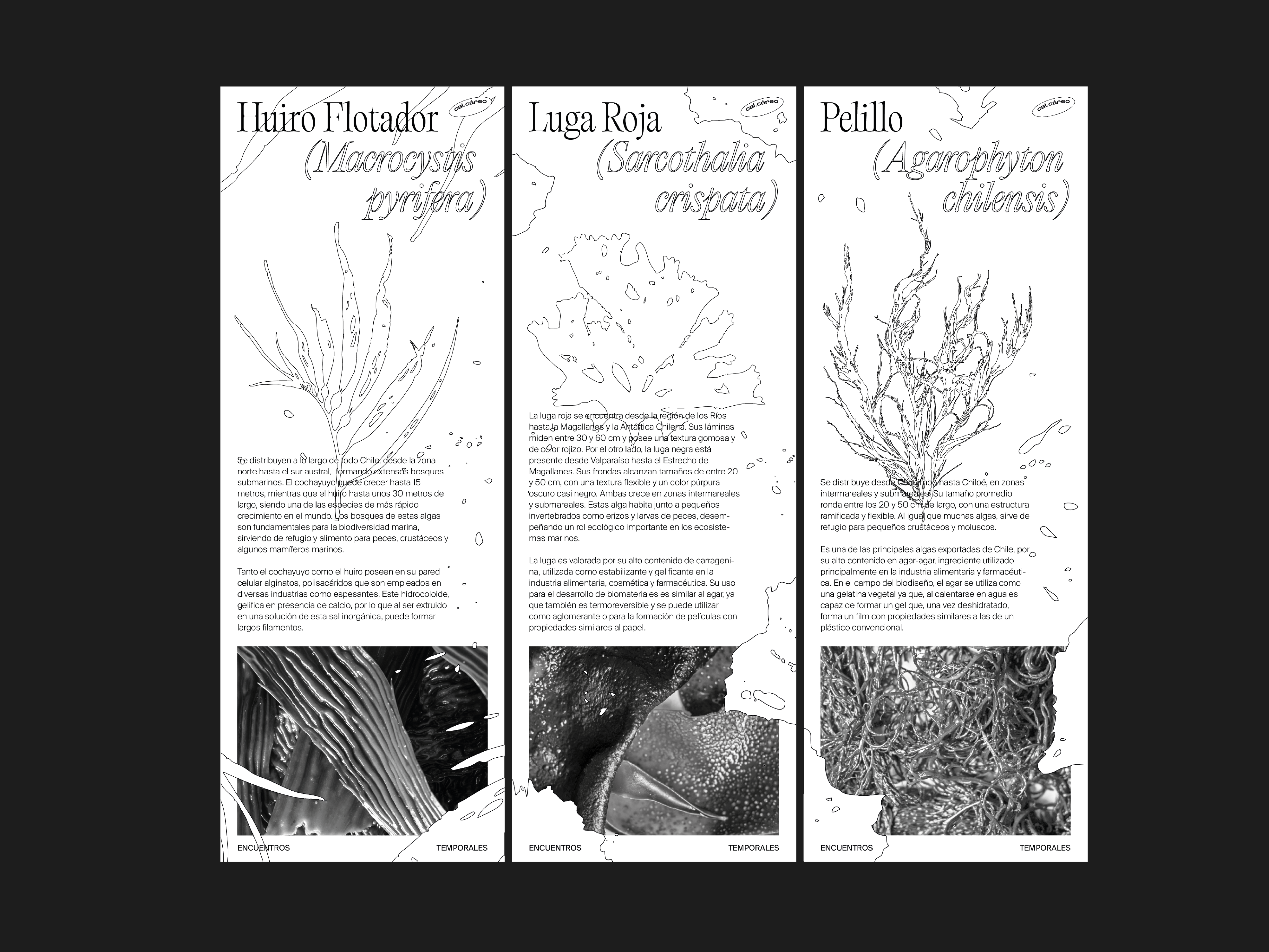
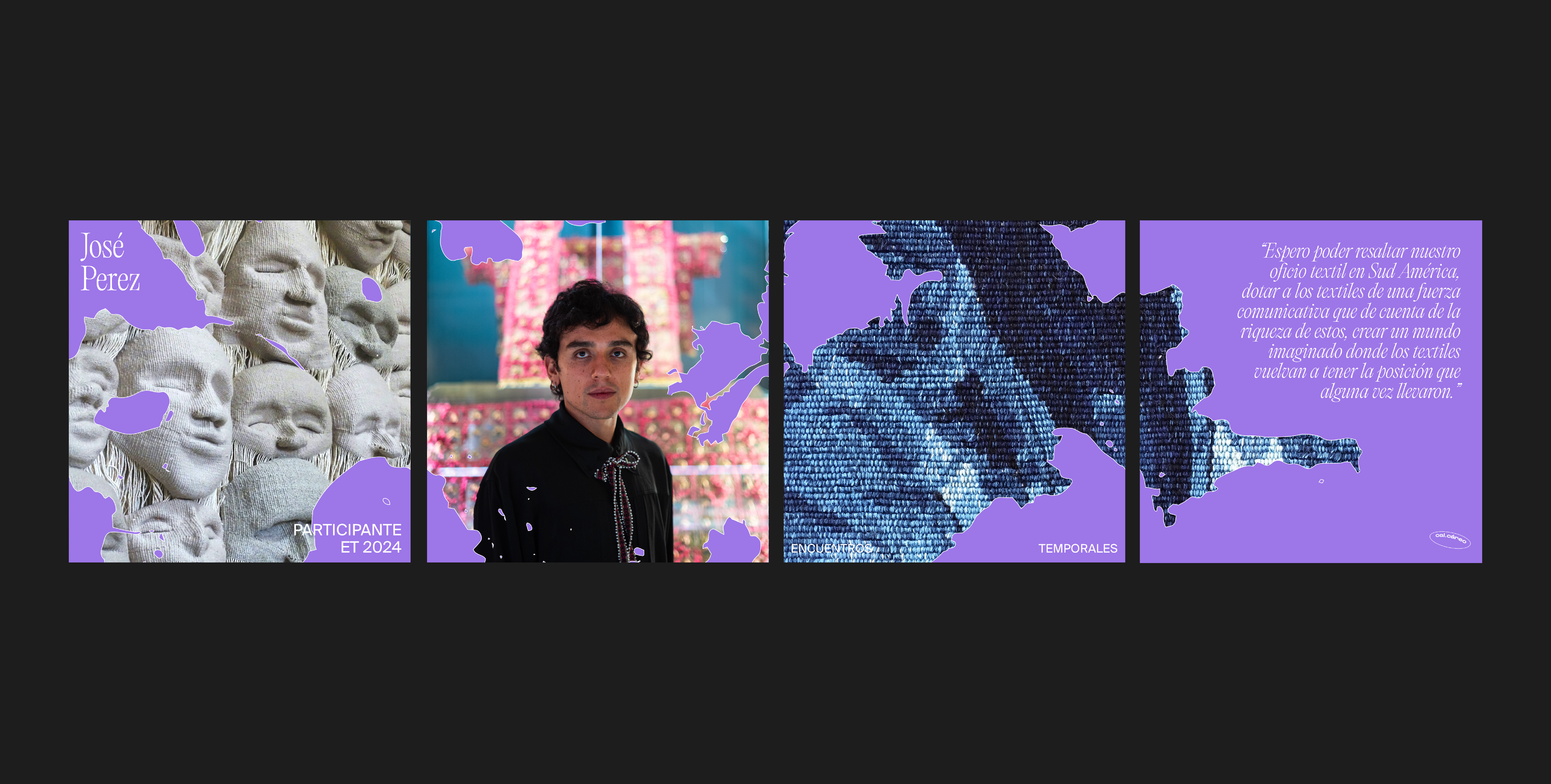
ENCUENTROS TEMPORALES
Art direction and visual identity for Encuentros Temporales, a creative program exploring the possibilities of marine biomaterials.
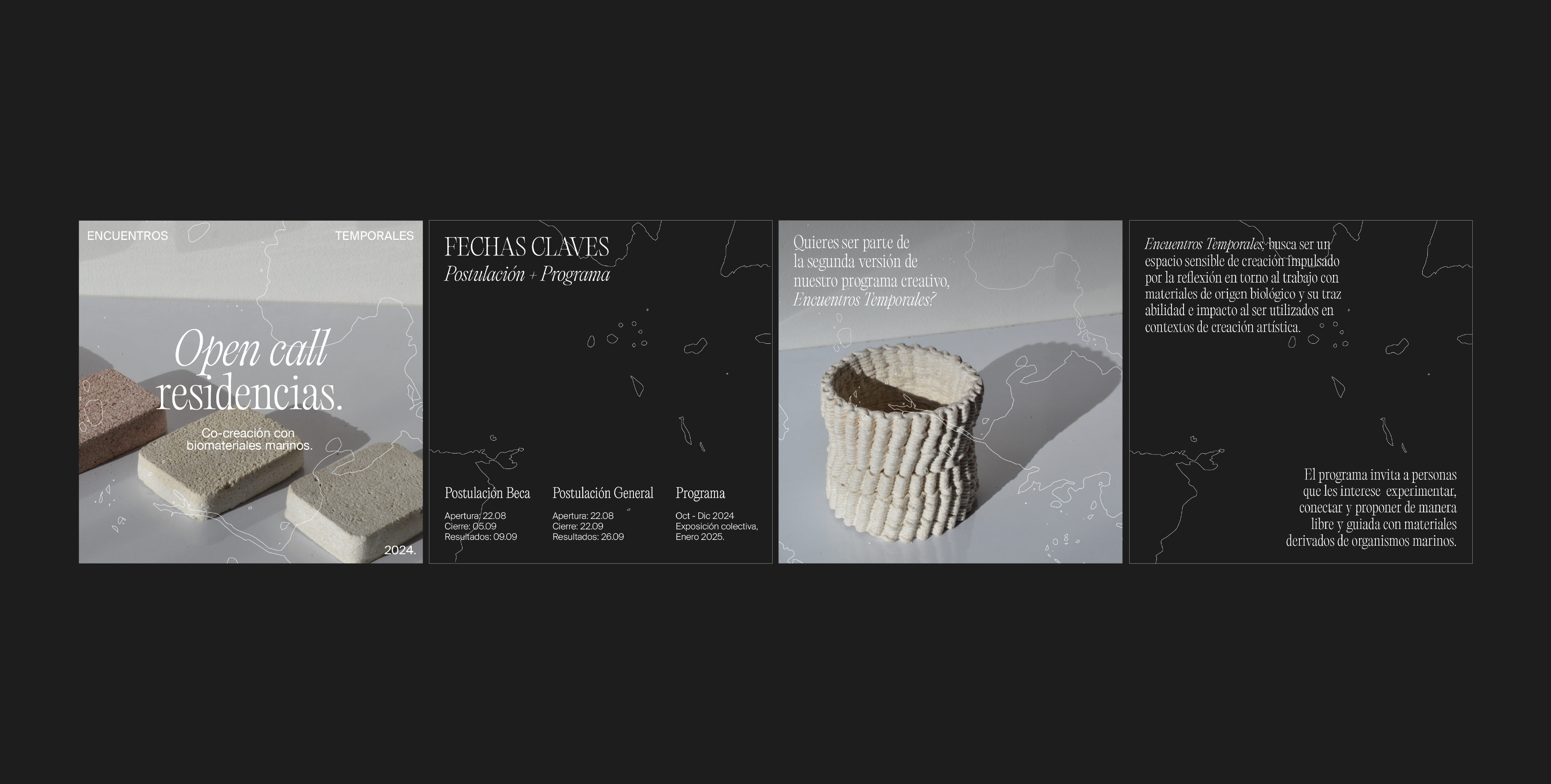
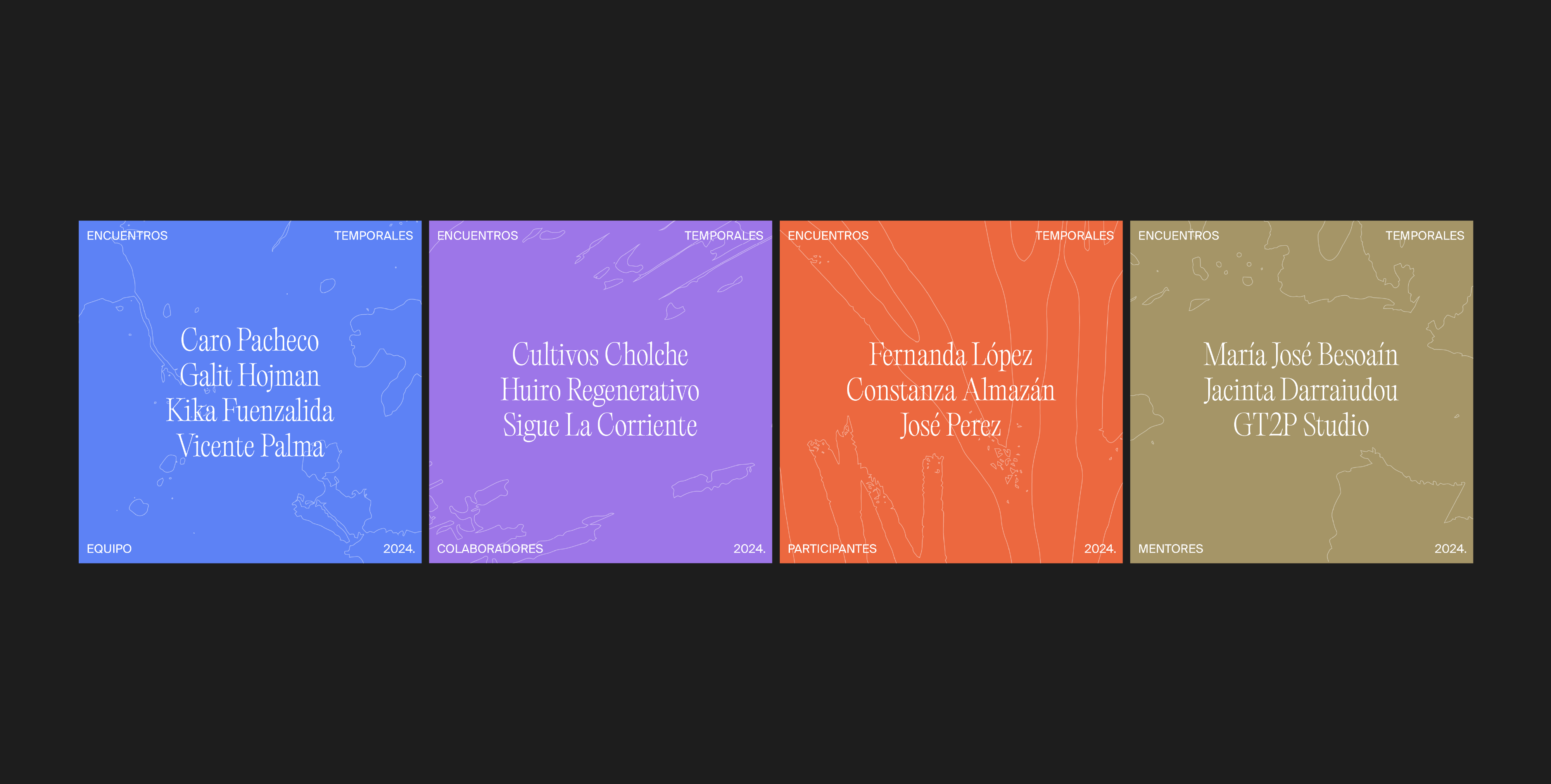
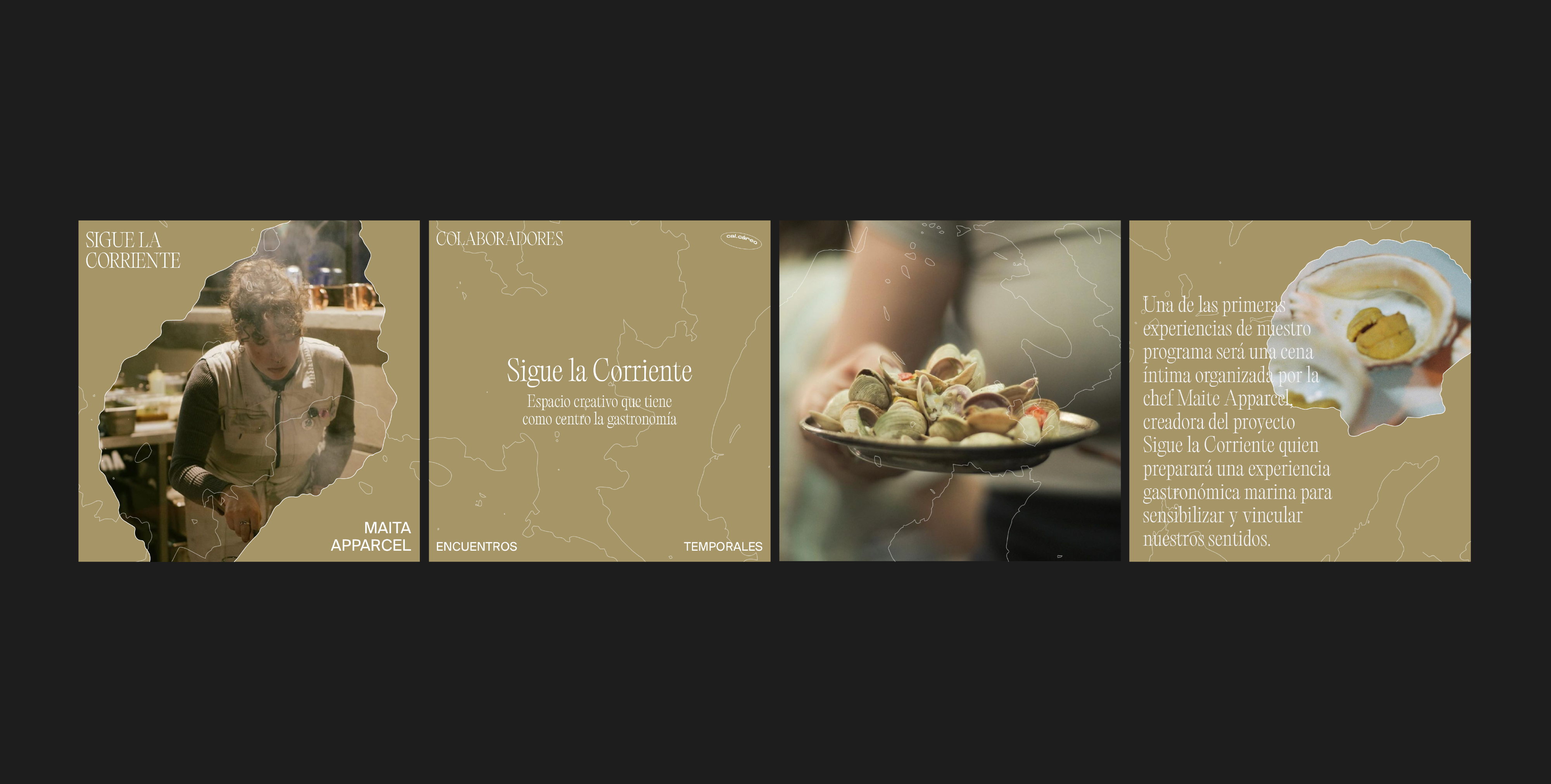
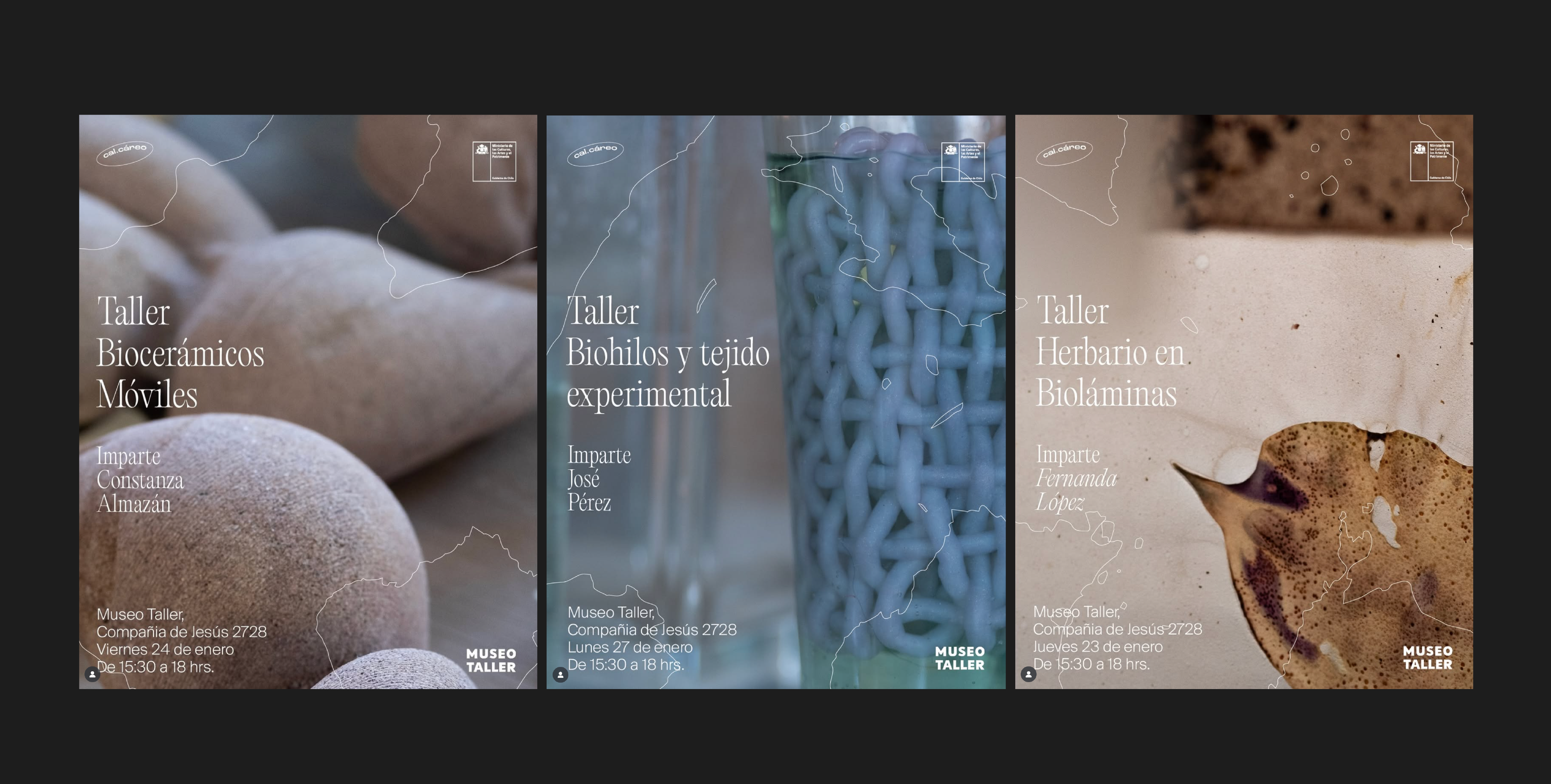

POSTNATURAL GEOLOGY
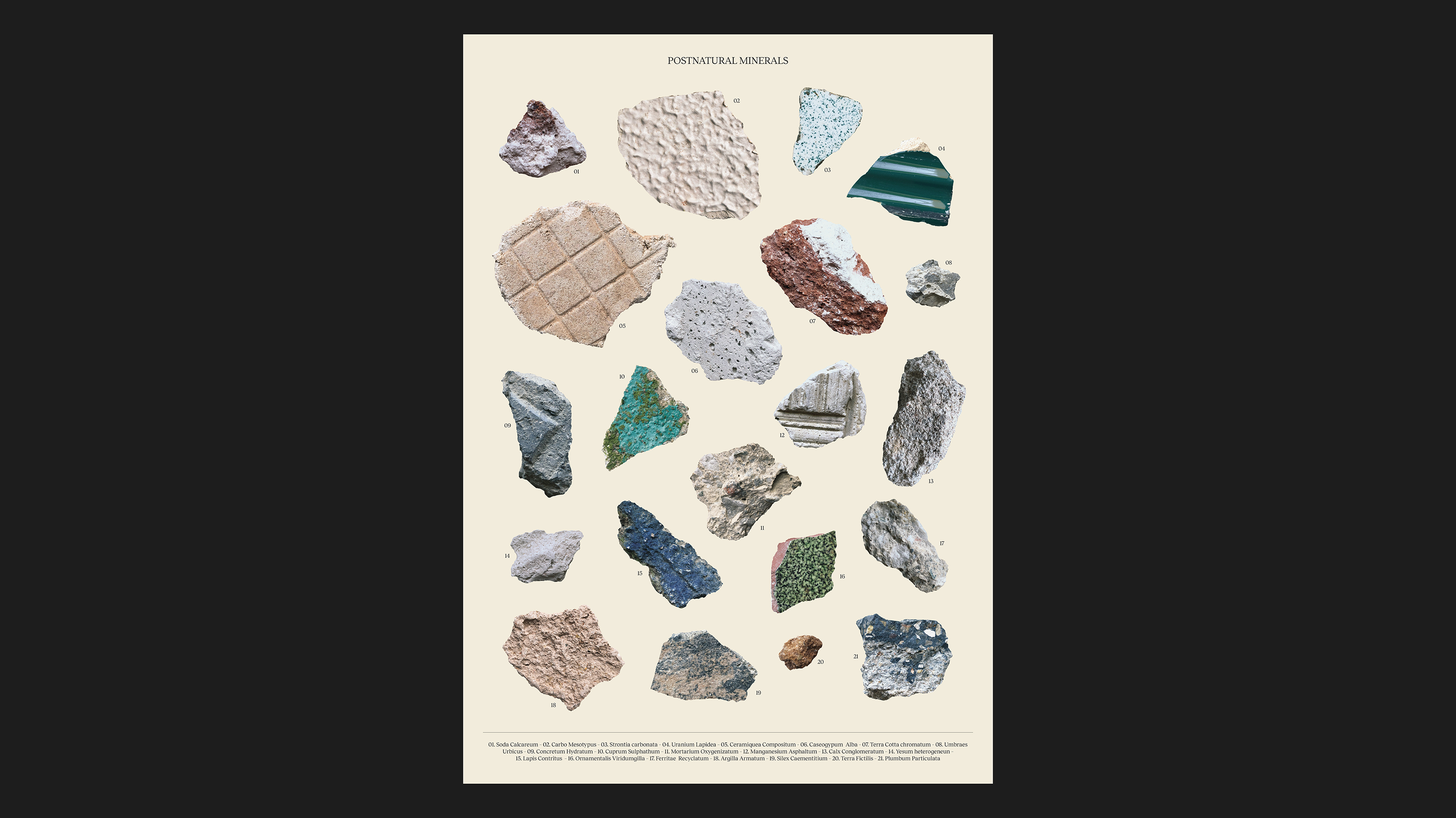
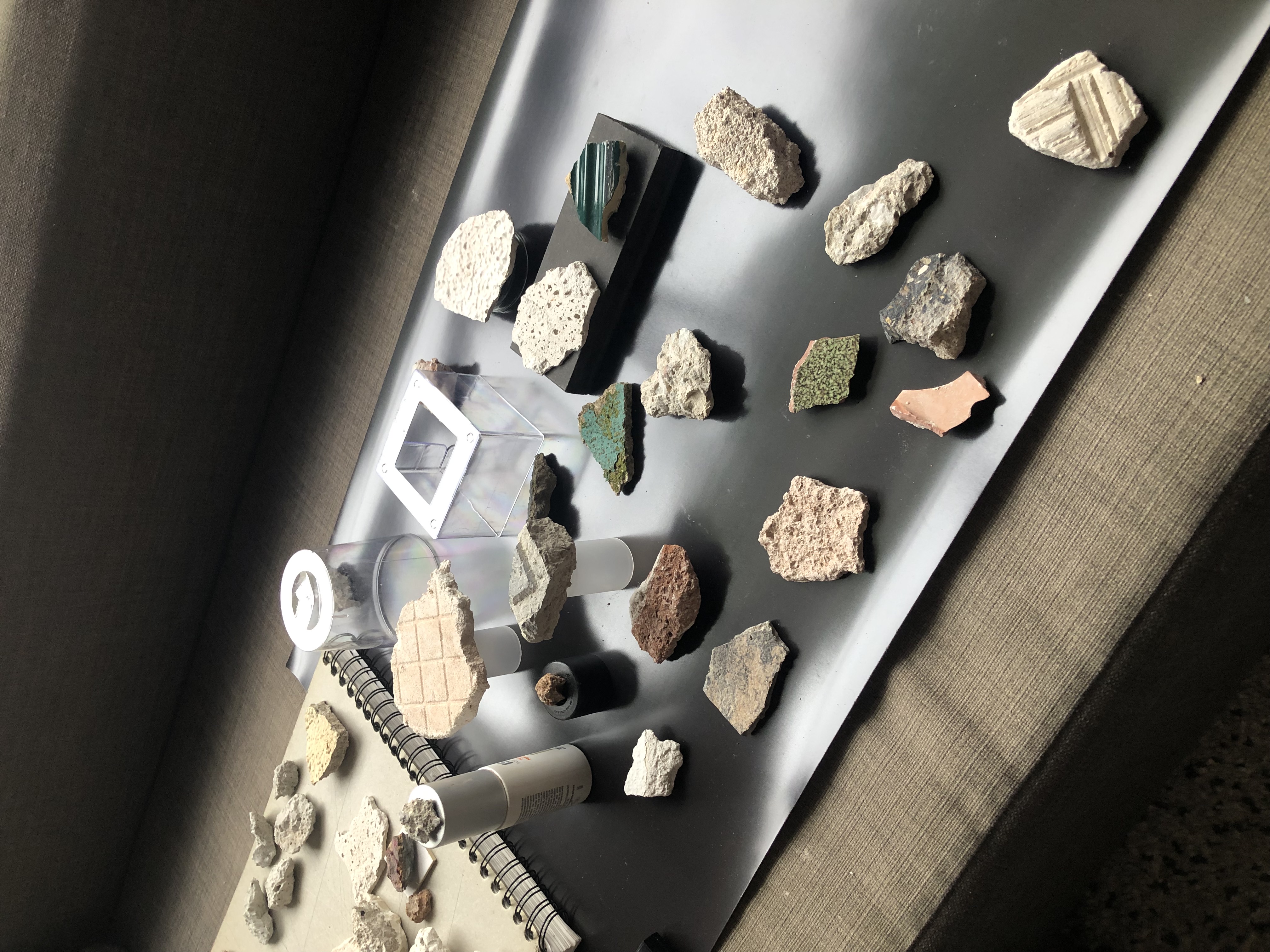
Speculative DesignWhat if demolition waste became the minerals in the future?
Year 2,500. After relentless and insatiable mineral extraction, there are no longer minerals beneath the earth as we once knew them. The passage of humankind has left its mark, and current excavations reflect this. The new postnatural minerals are the result of unchecked extraction driven by the idea of linear and excessive progress. The desire to satisfy the technological, construction, and energy demands of the 21st century led to a geological shift at record speed.
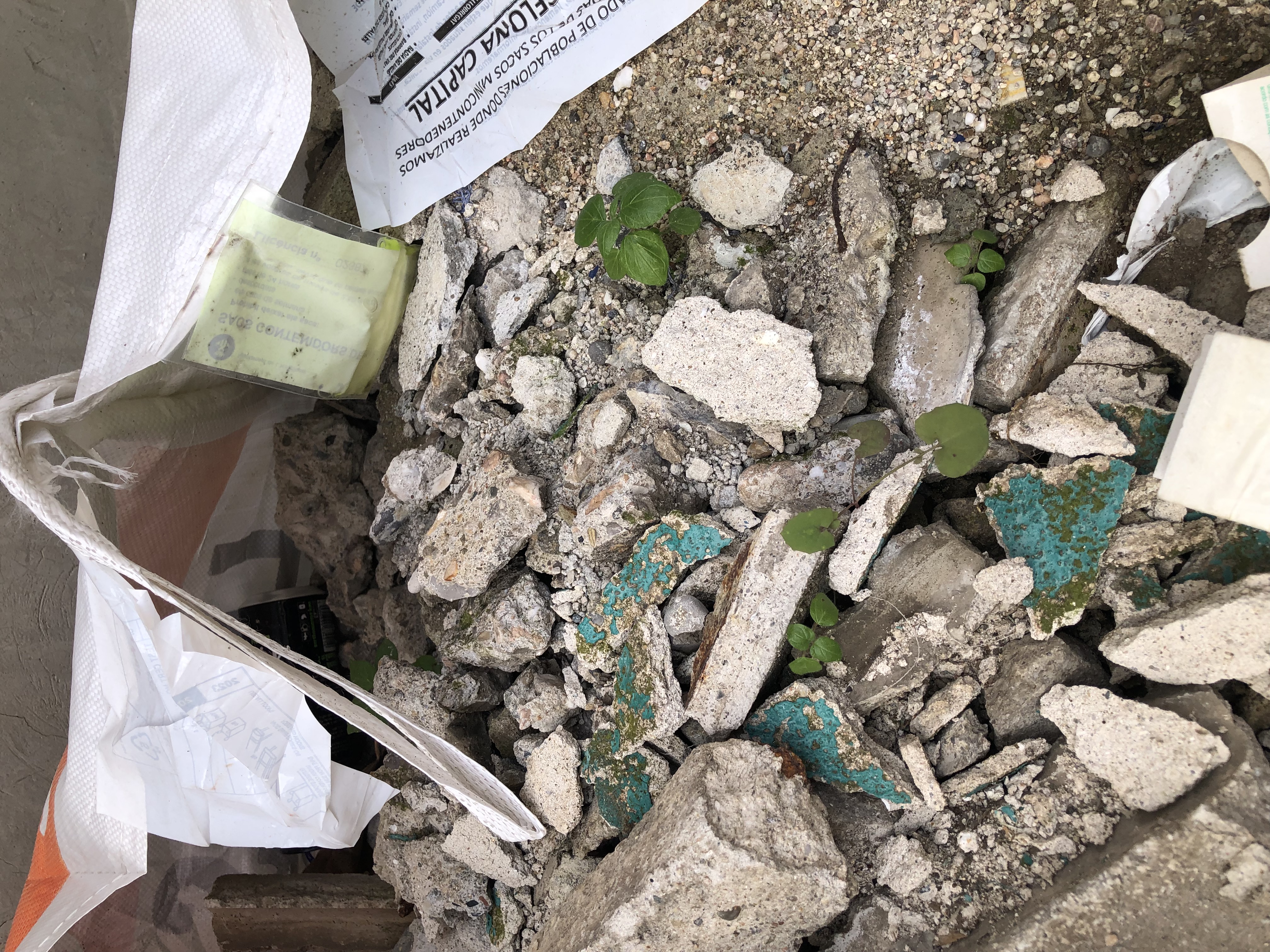
Minerals that once formed through natural processes now reflect human activity. In a compulsive pursuit of what was once considered progress, thousands of architectural buildings from the past have been demolished. With natural minerals now scarce, a new layer has formed in the subsoil: what was once debris has now become a precious material.
This project, which reveals new underground landscapes as a reflection of anthropocentrism, aims to provide a critical look at the material effects we leave behind. Project developed in the course “Fiction, Critical & Speculative Design” within the Master in Design Research at BAU.


PILCAN
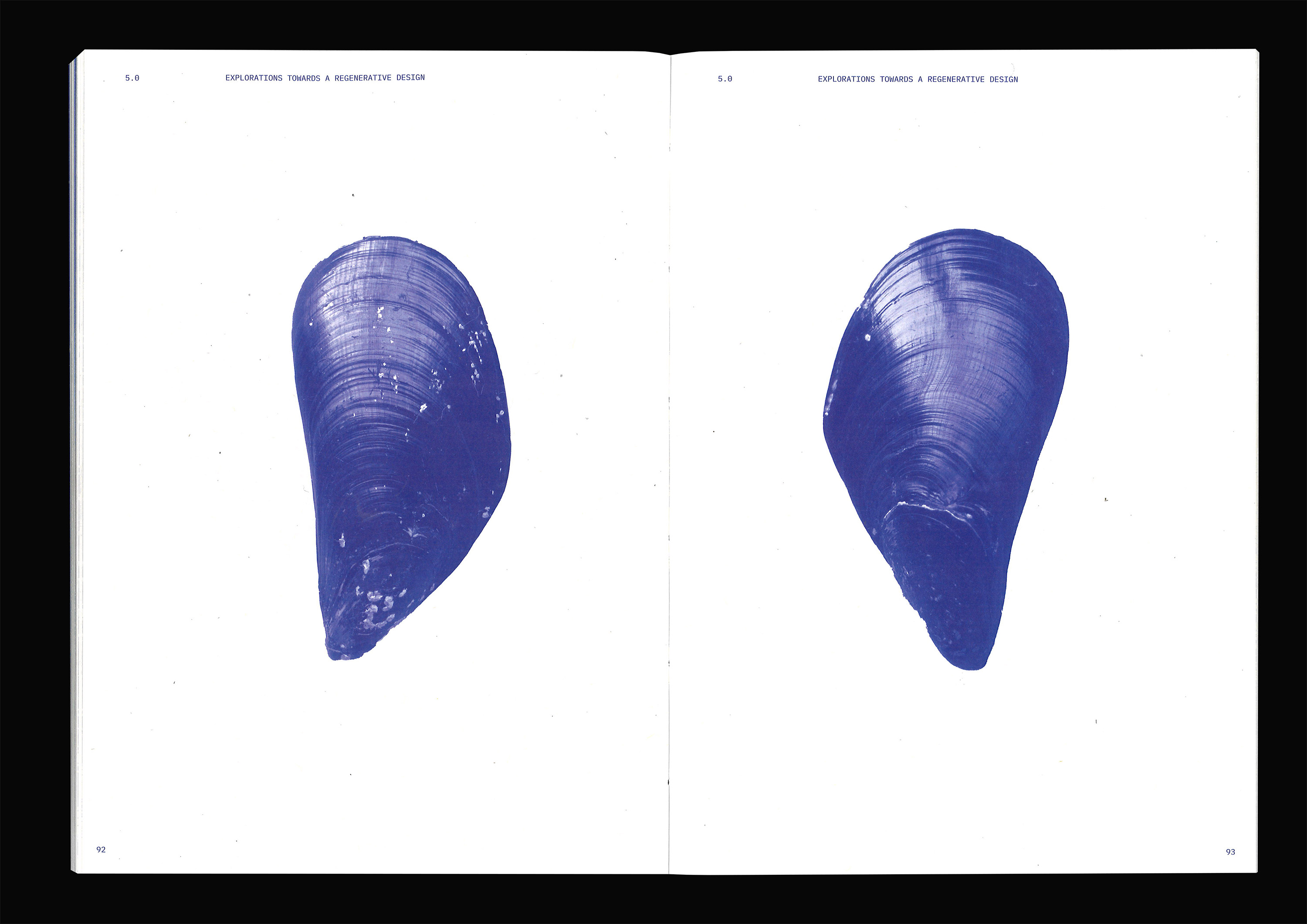
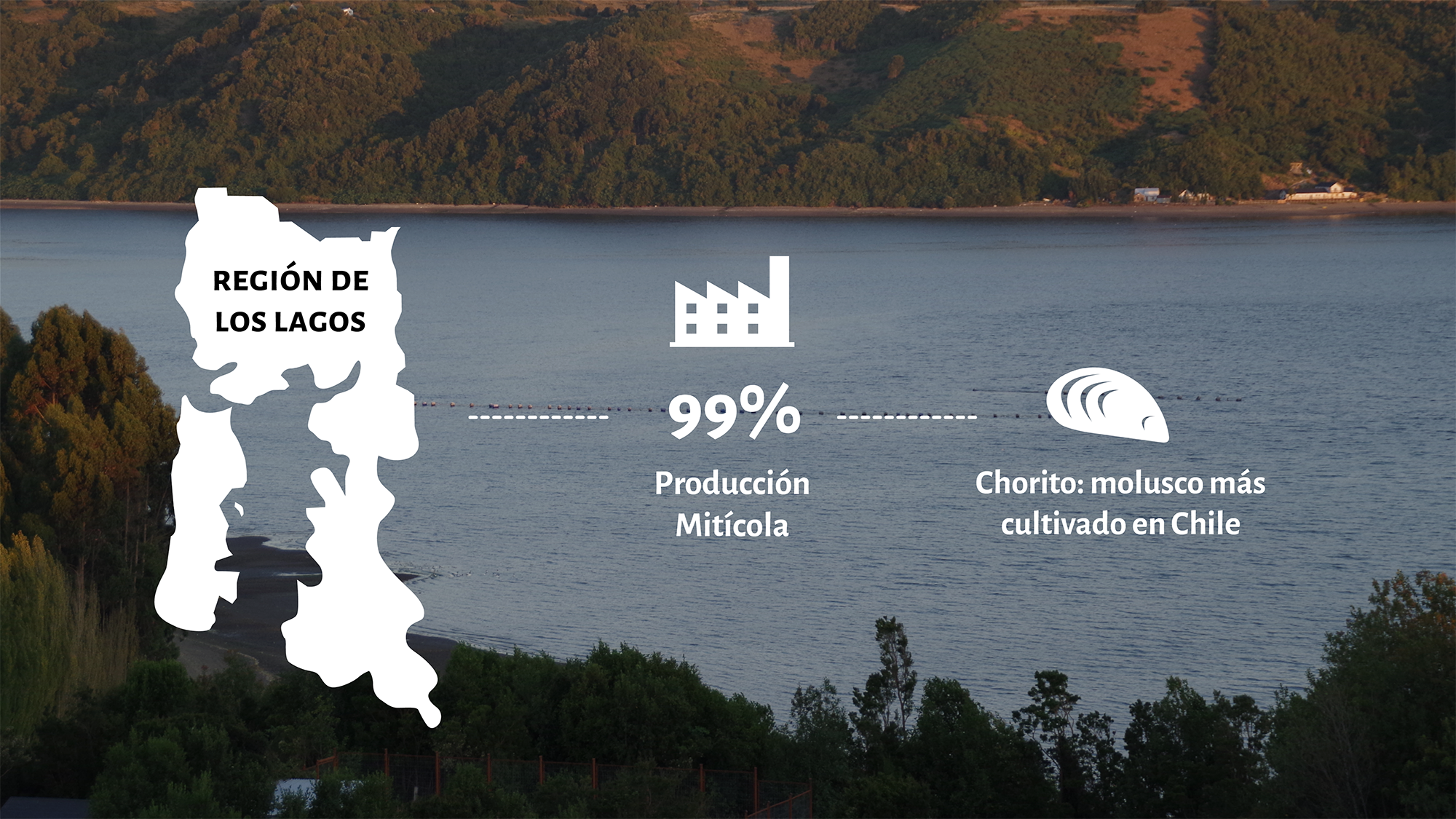
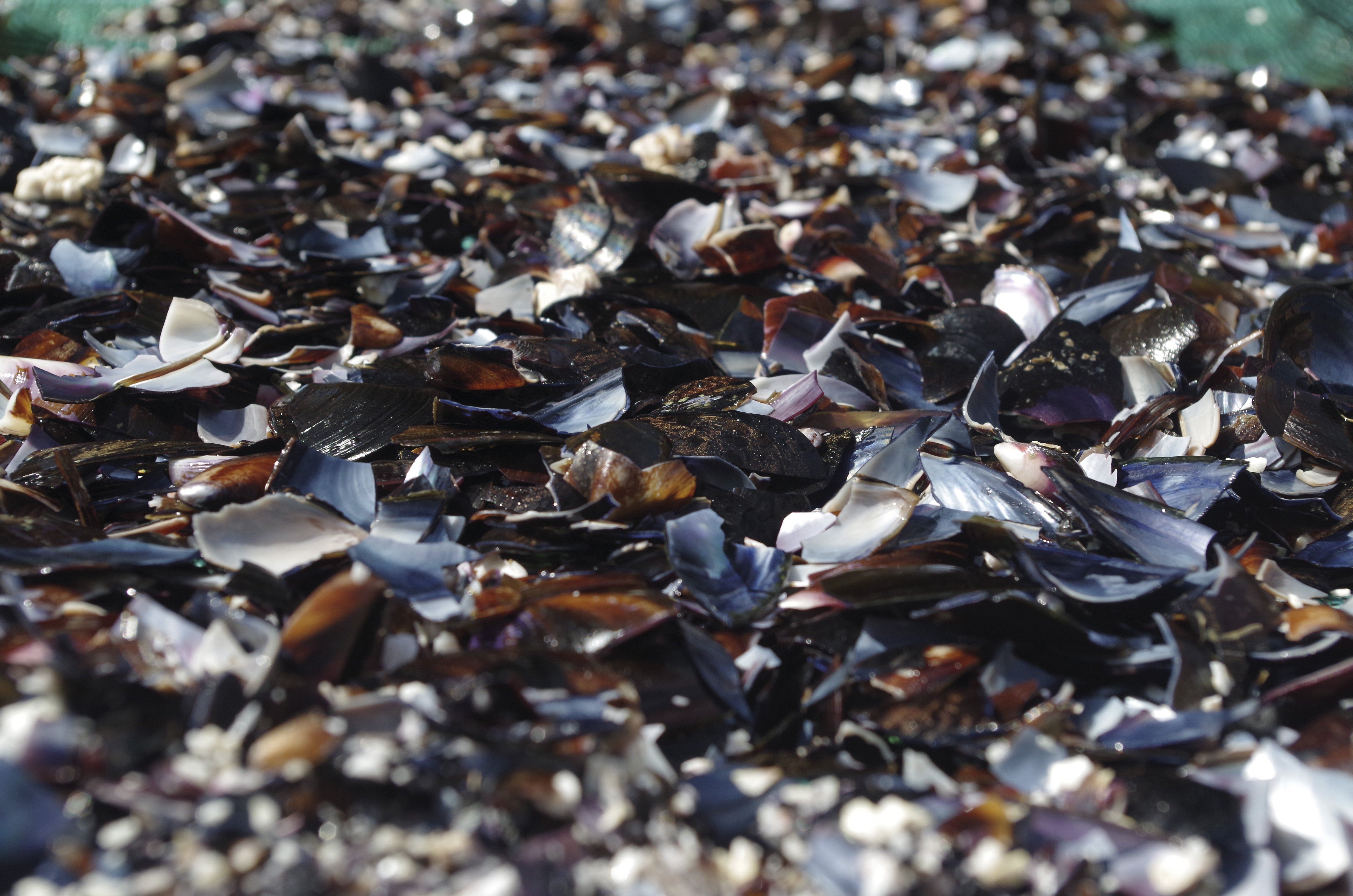
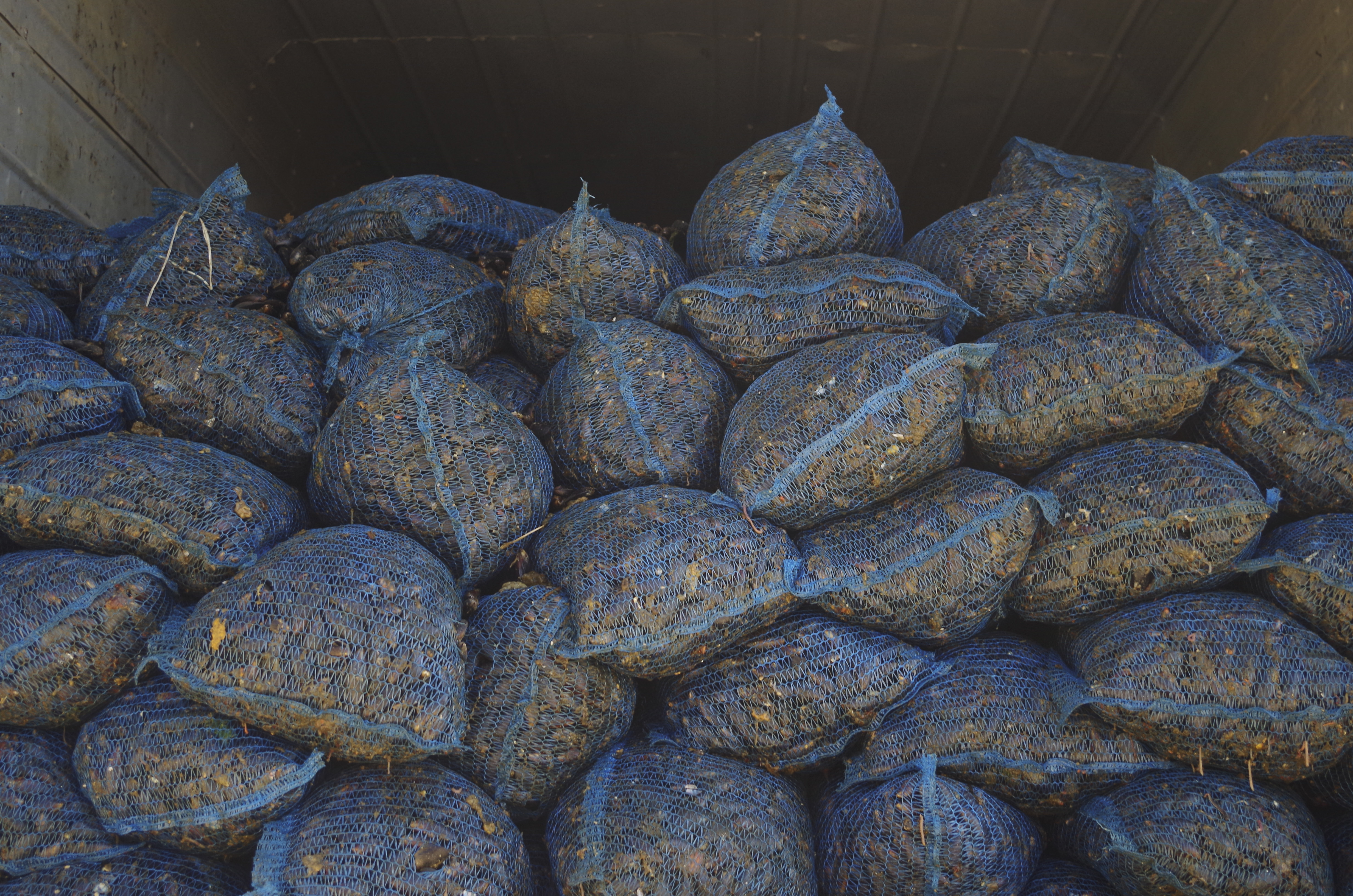
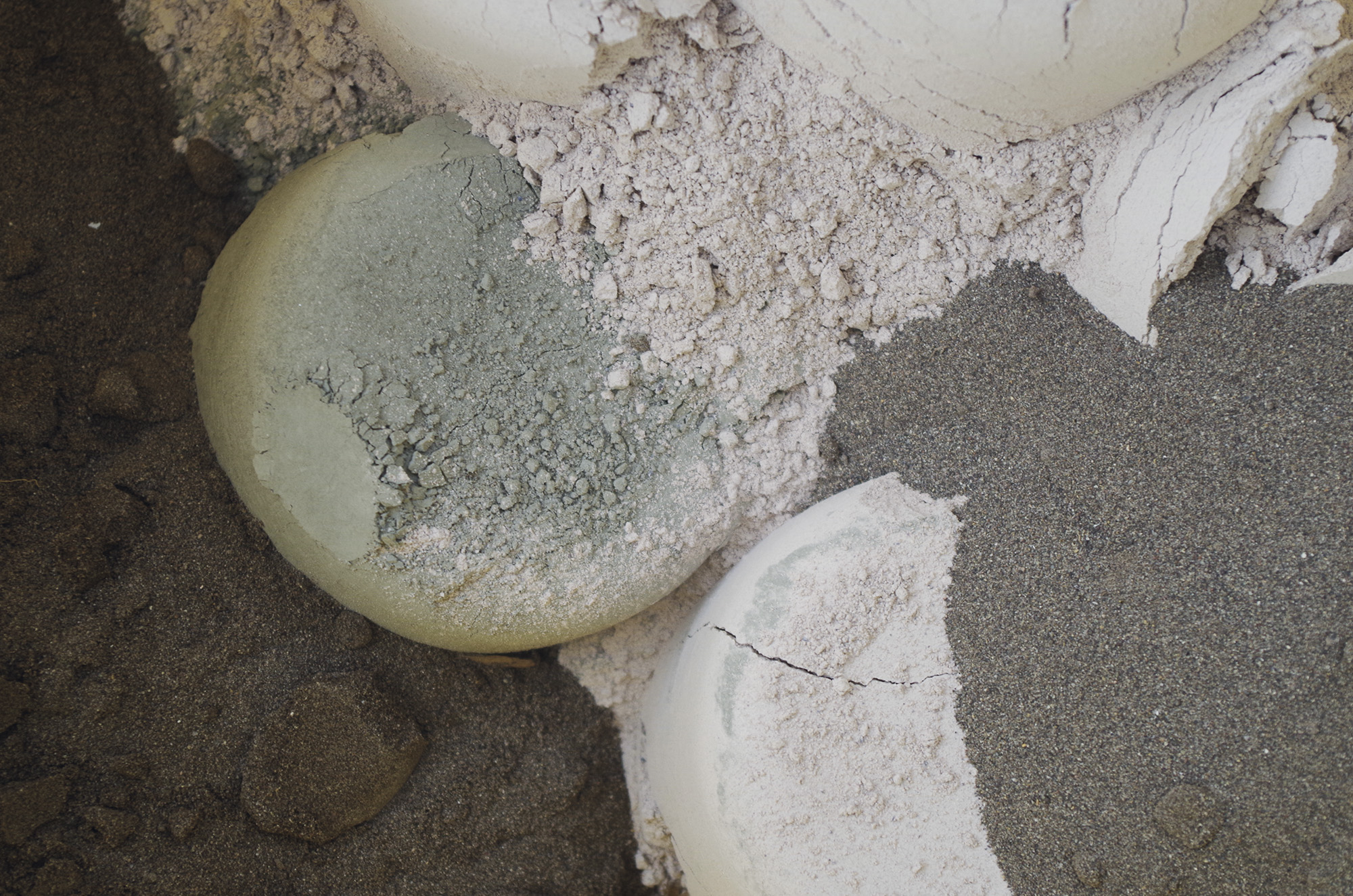
In southern Chile, the mussel industry generates more than 75.000 metric tons of shell 🐚 waste per year. Mussel shells are primarily composed of calcium carbonate (>95%), which is significantly higher than the average concentrations found in limestone in central Chile, where the cement industry is located.
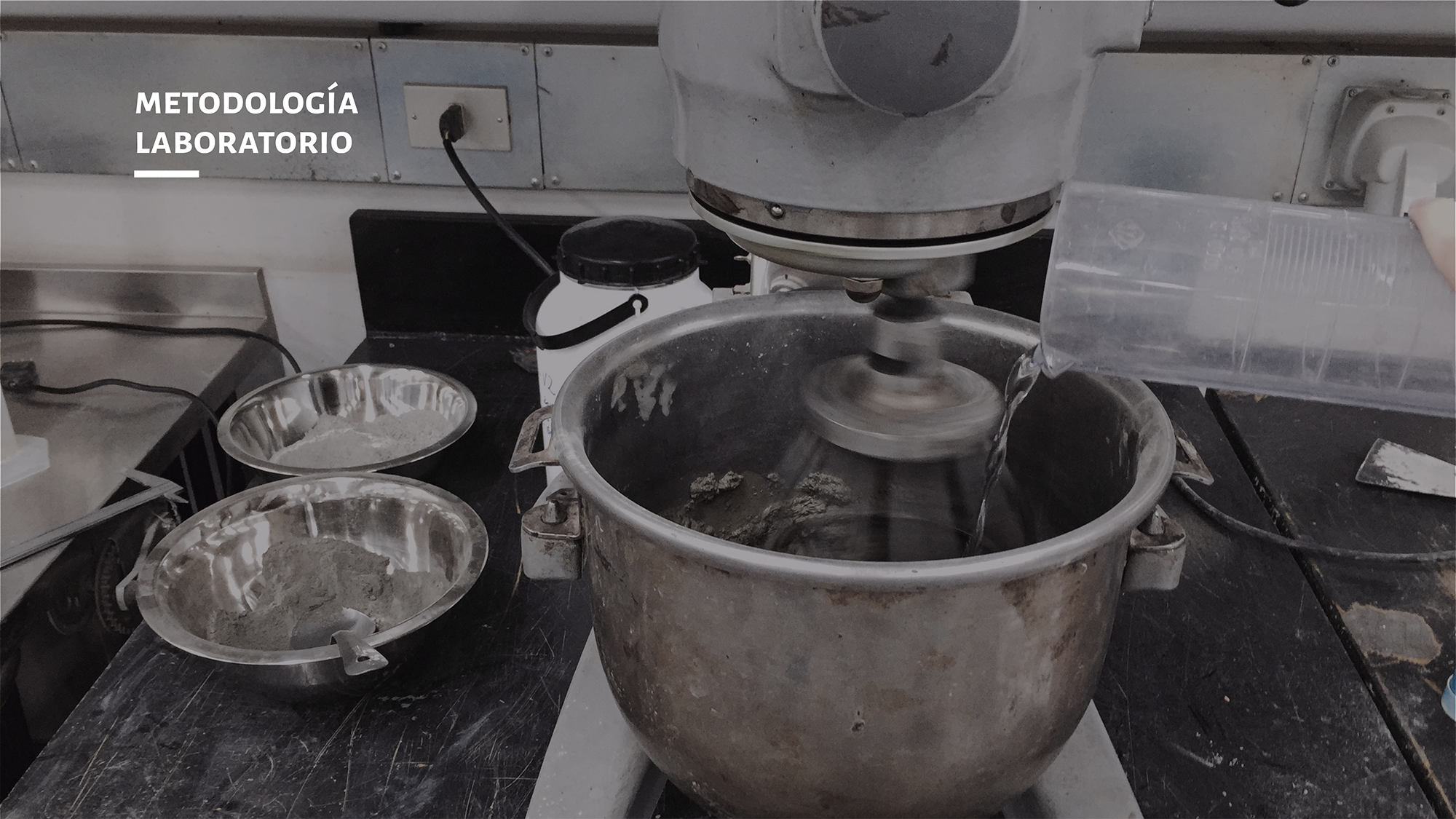
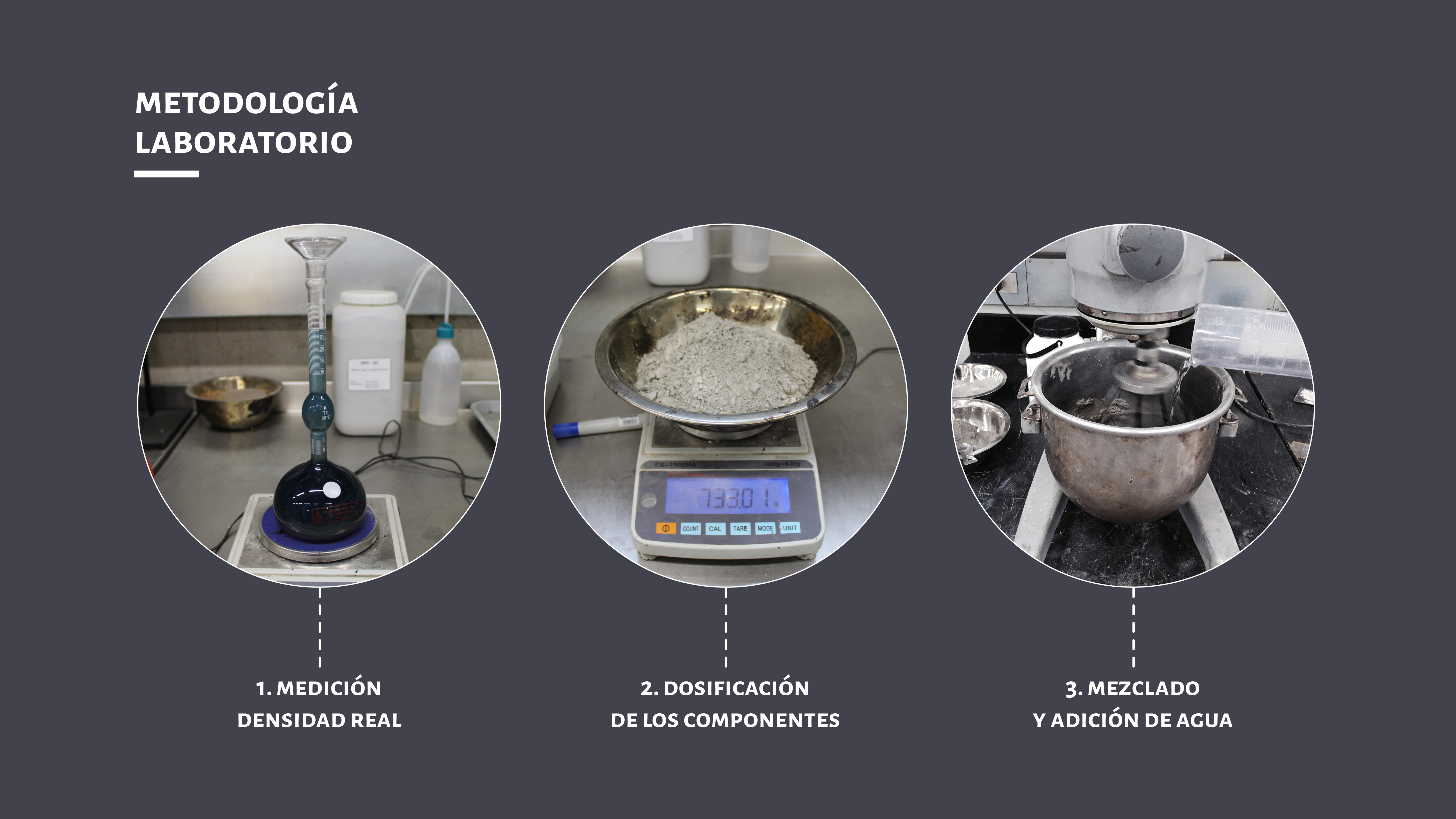
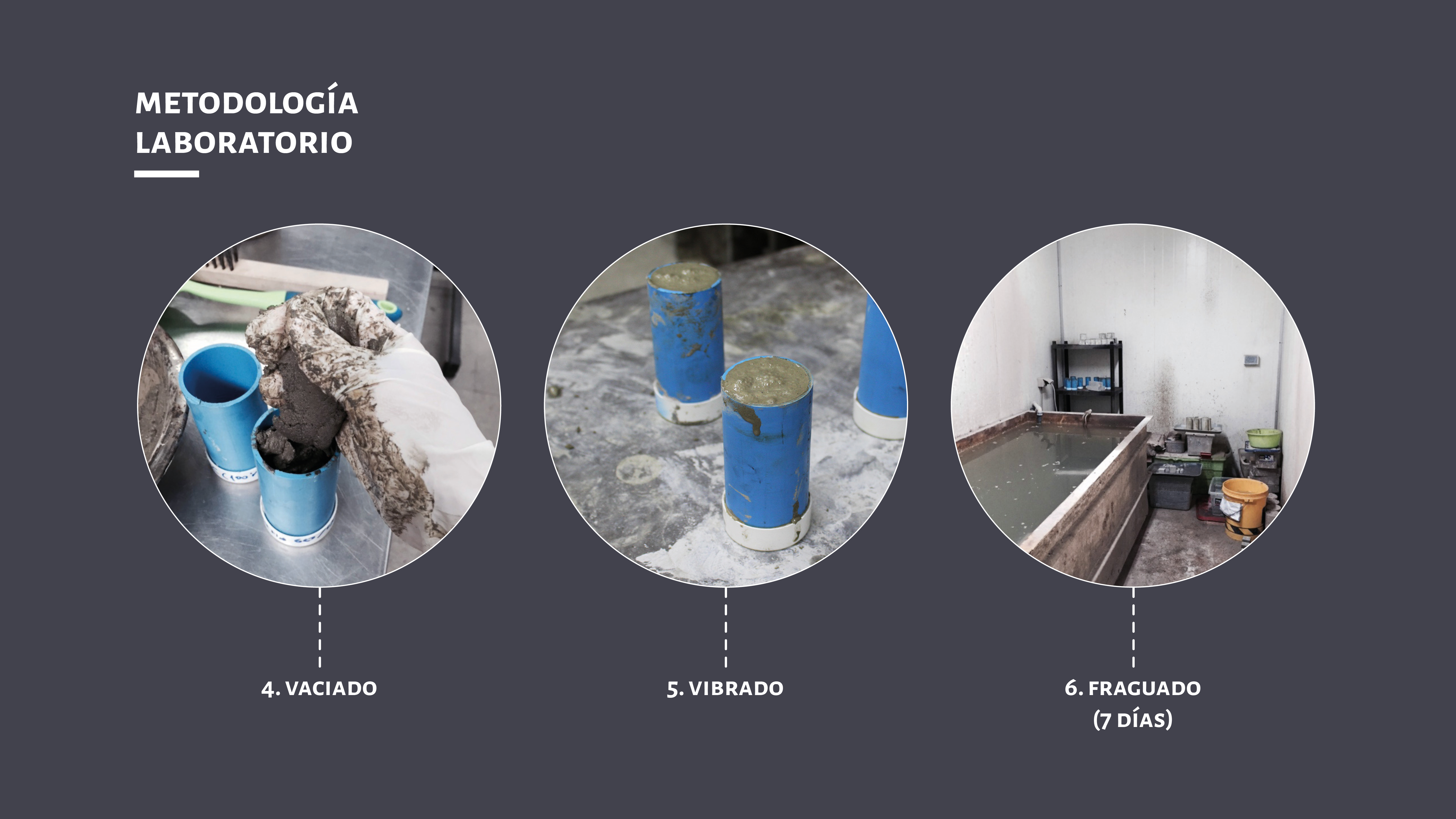
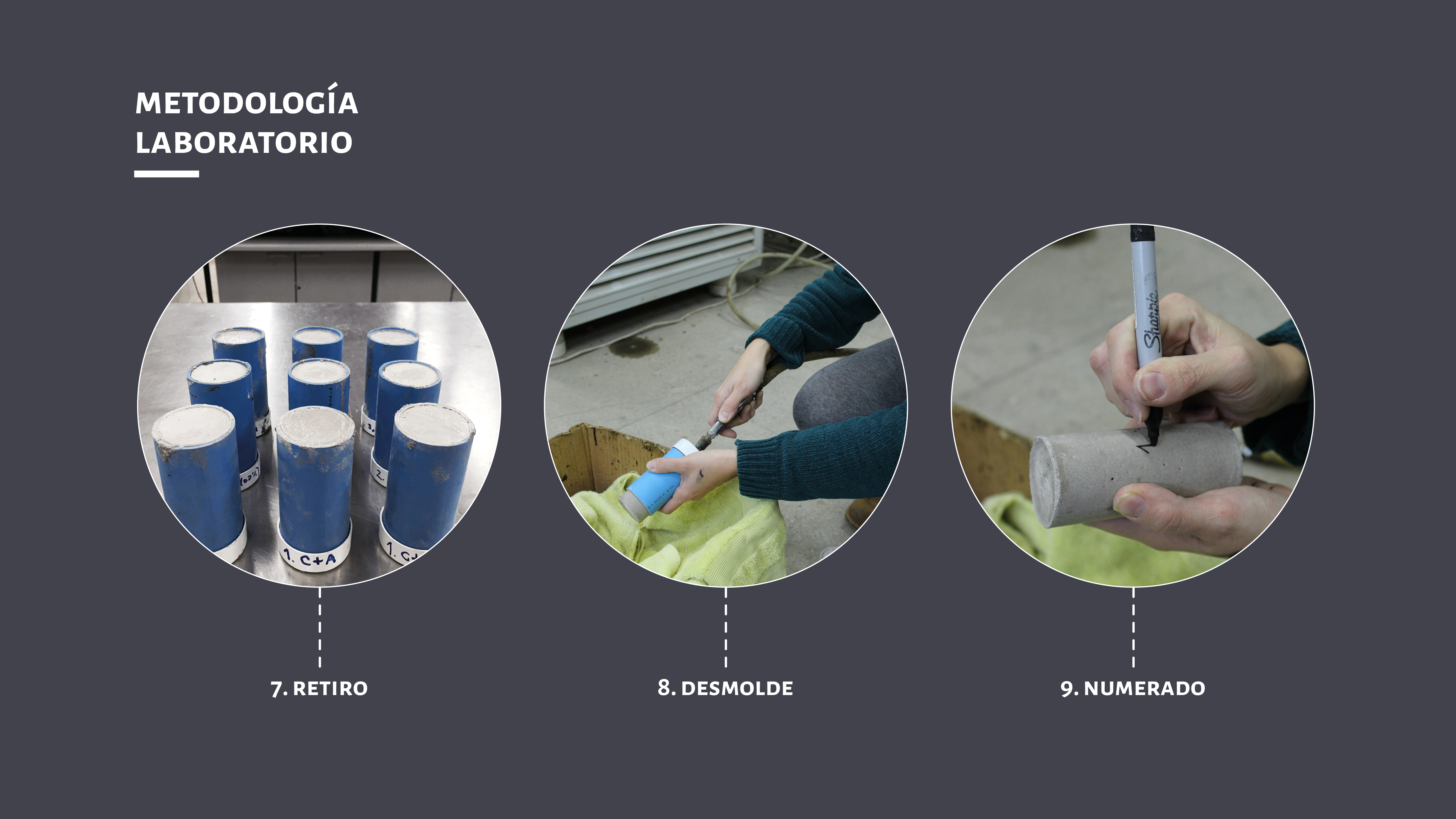
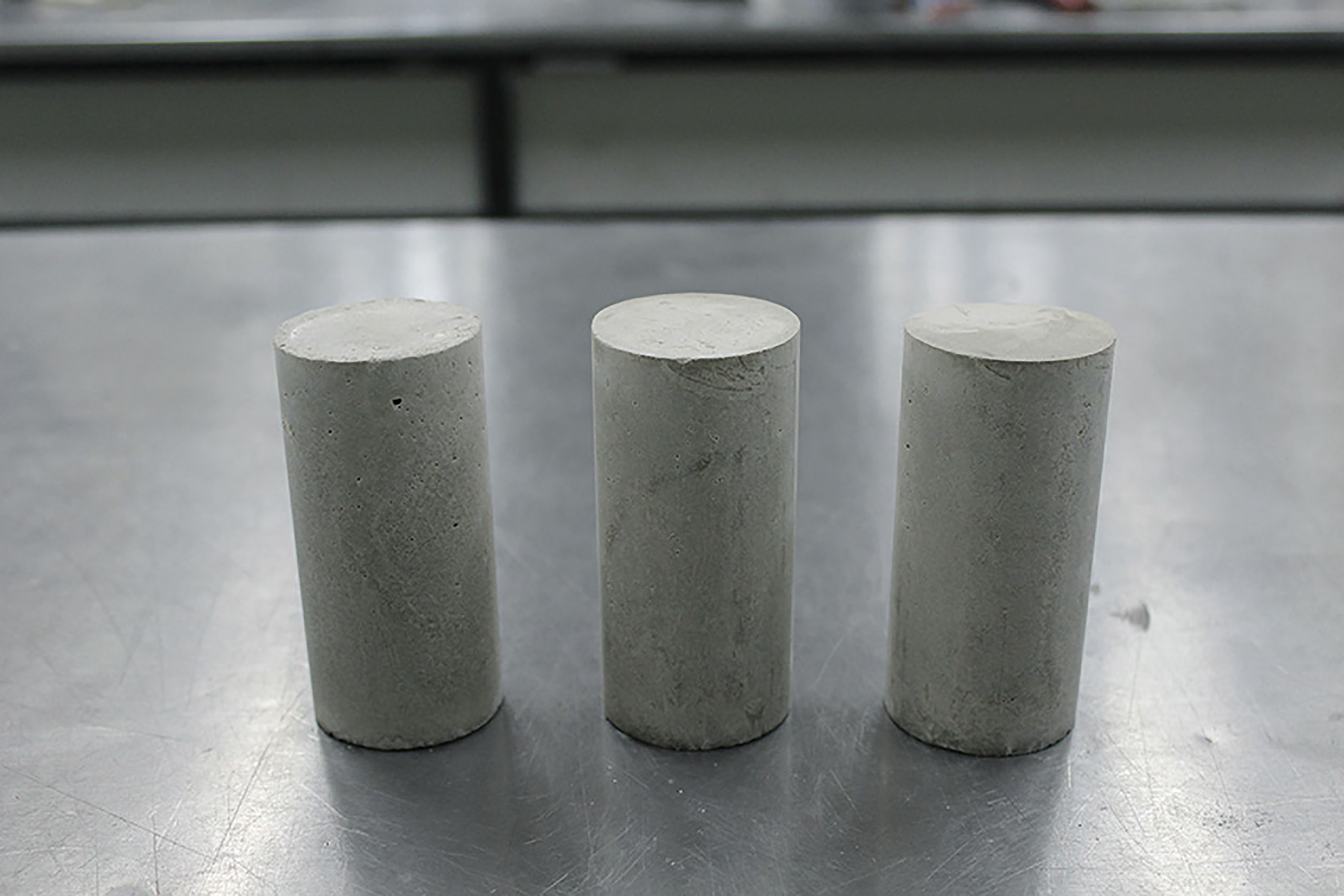
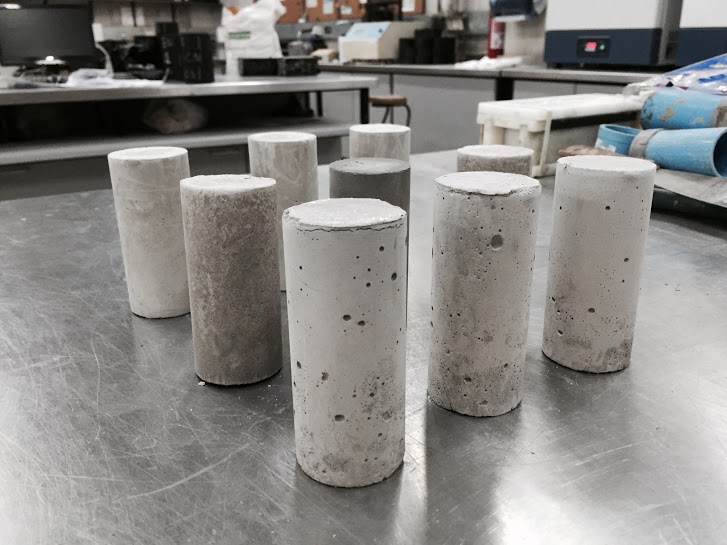
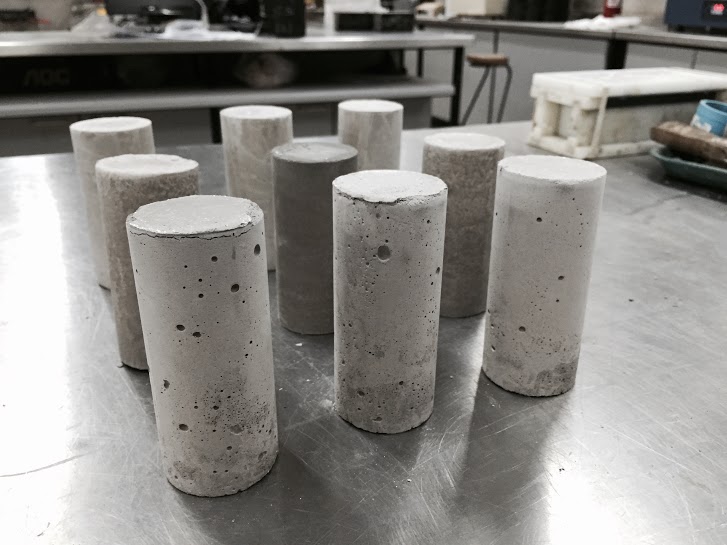
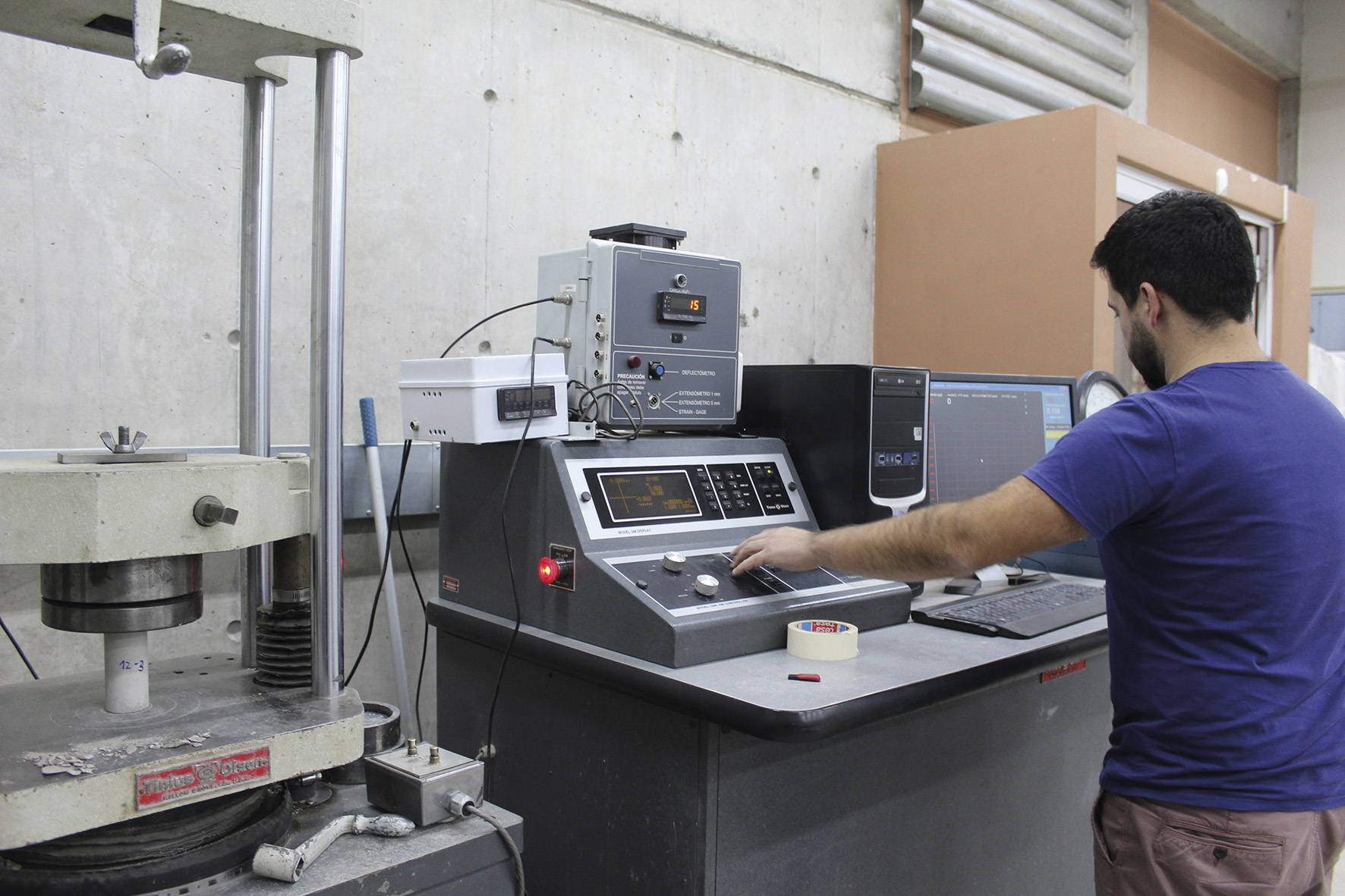
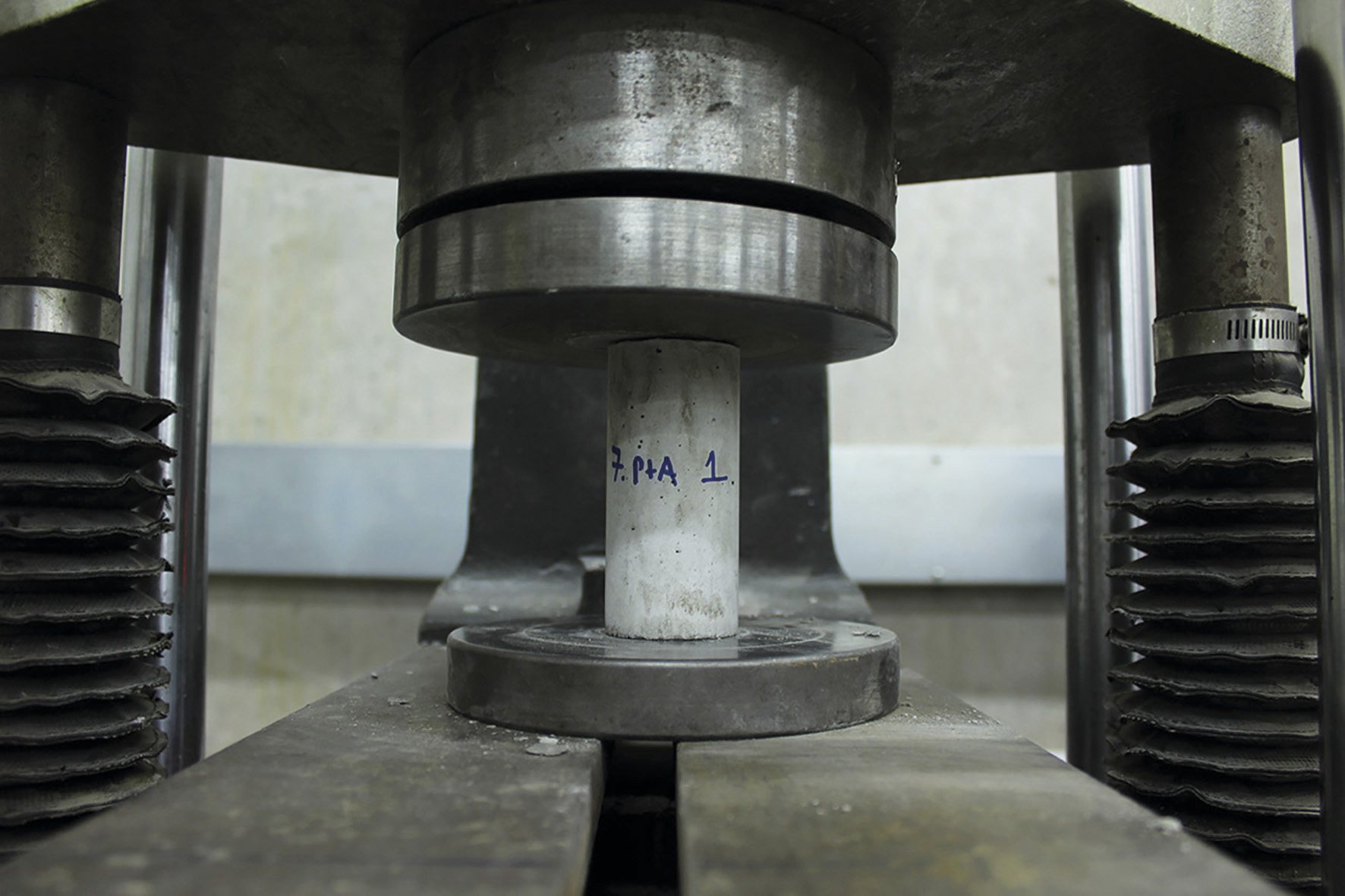
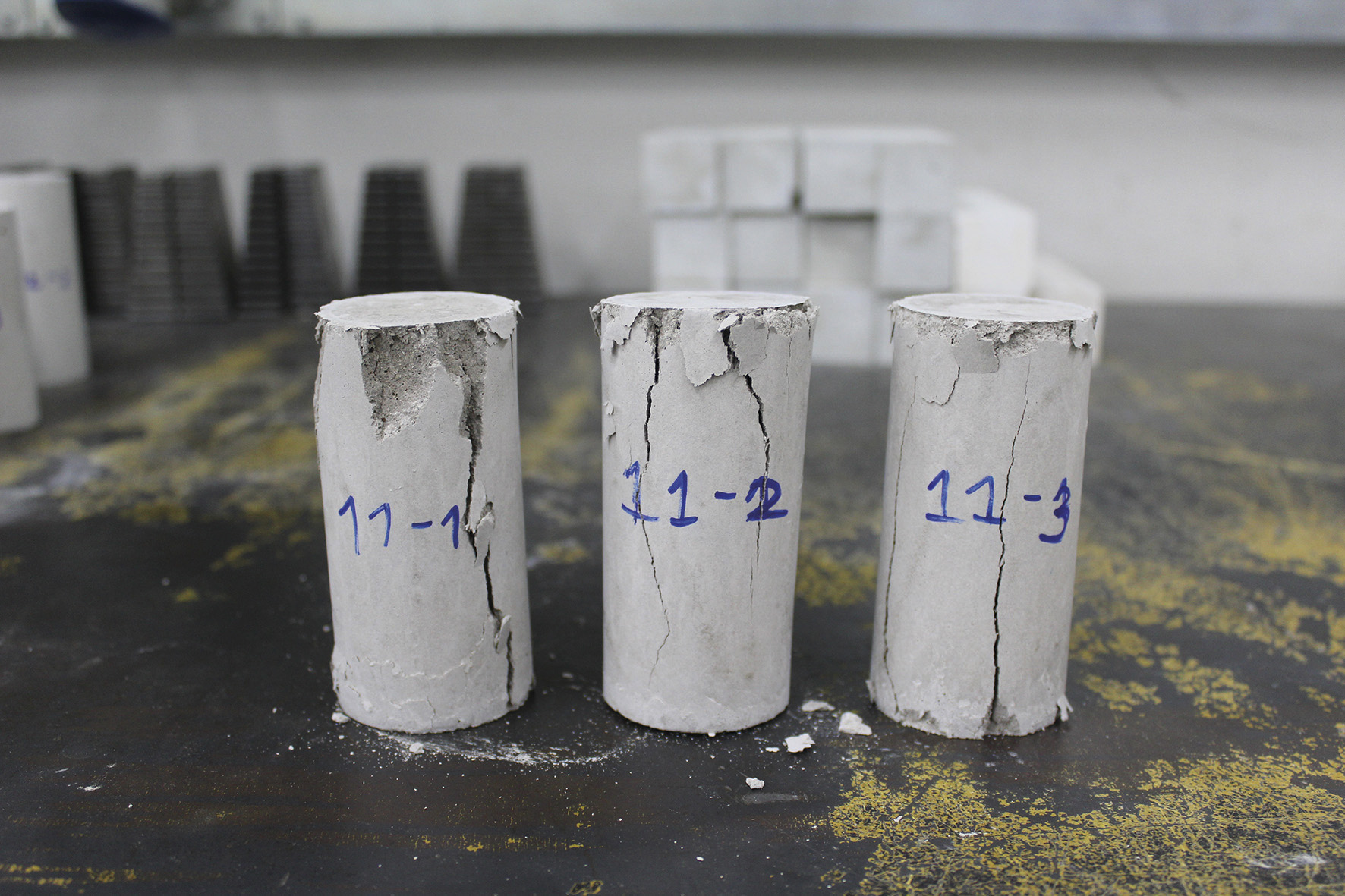
By developing Pilcán, a mussel-based concrete which partially replaces cement in the mixture, I aimed at producing a more sustainable construction material. Through axial load testing, I developed several different mixtures to check the maximum amount of shells the material could have, according to resistance standards. My purpose was to generate a material with the lowest possible carbon footprint.
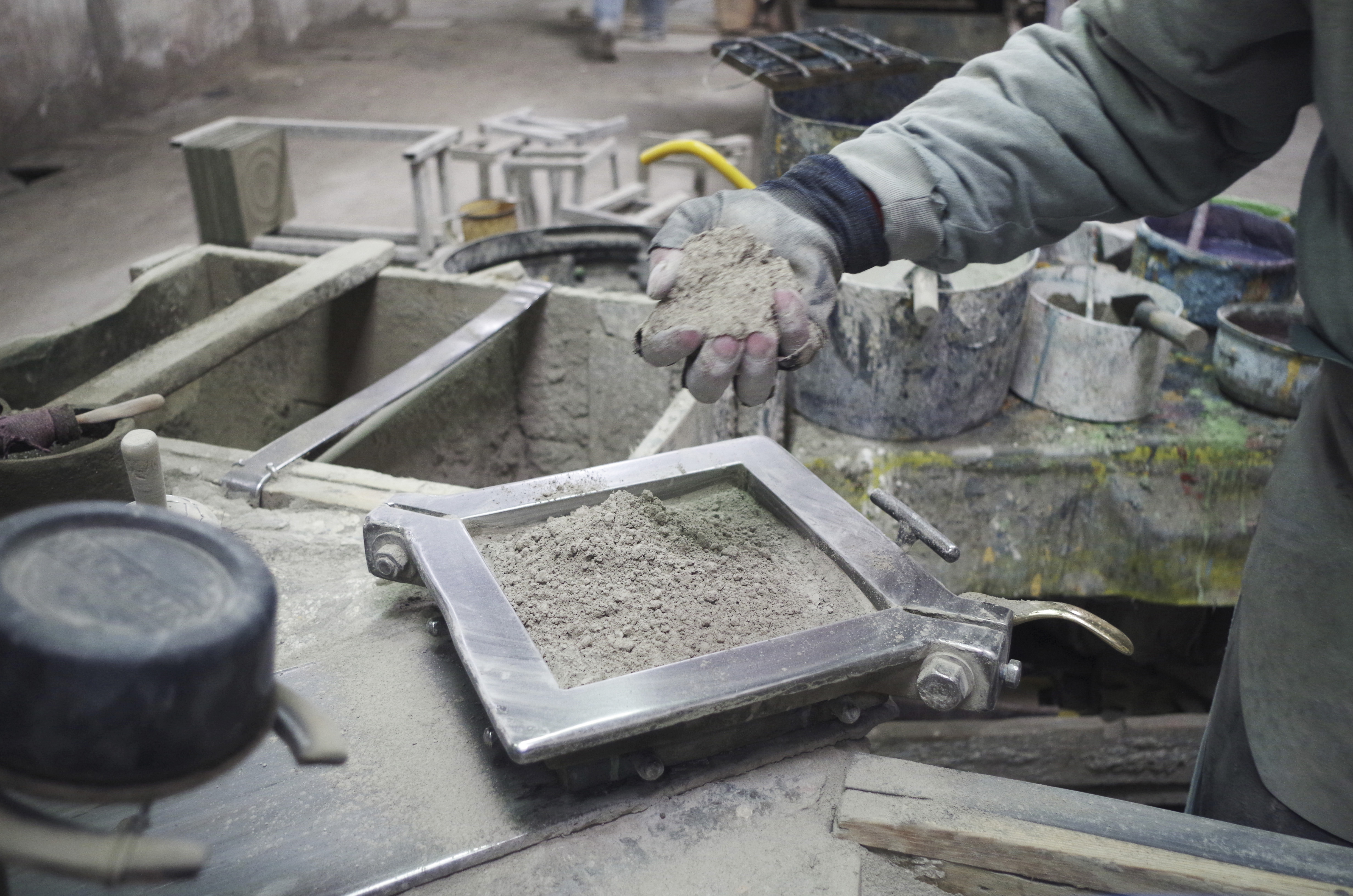
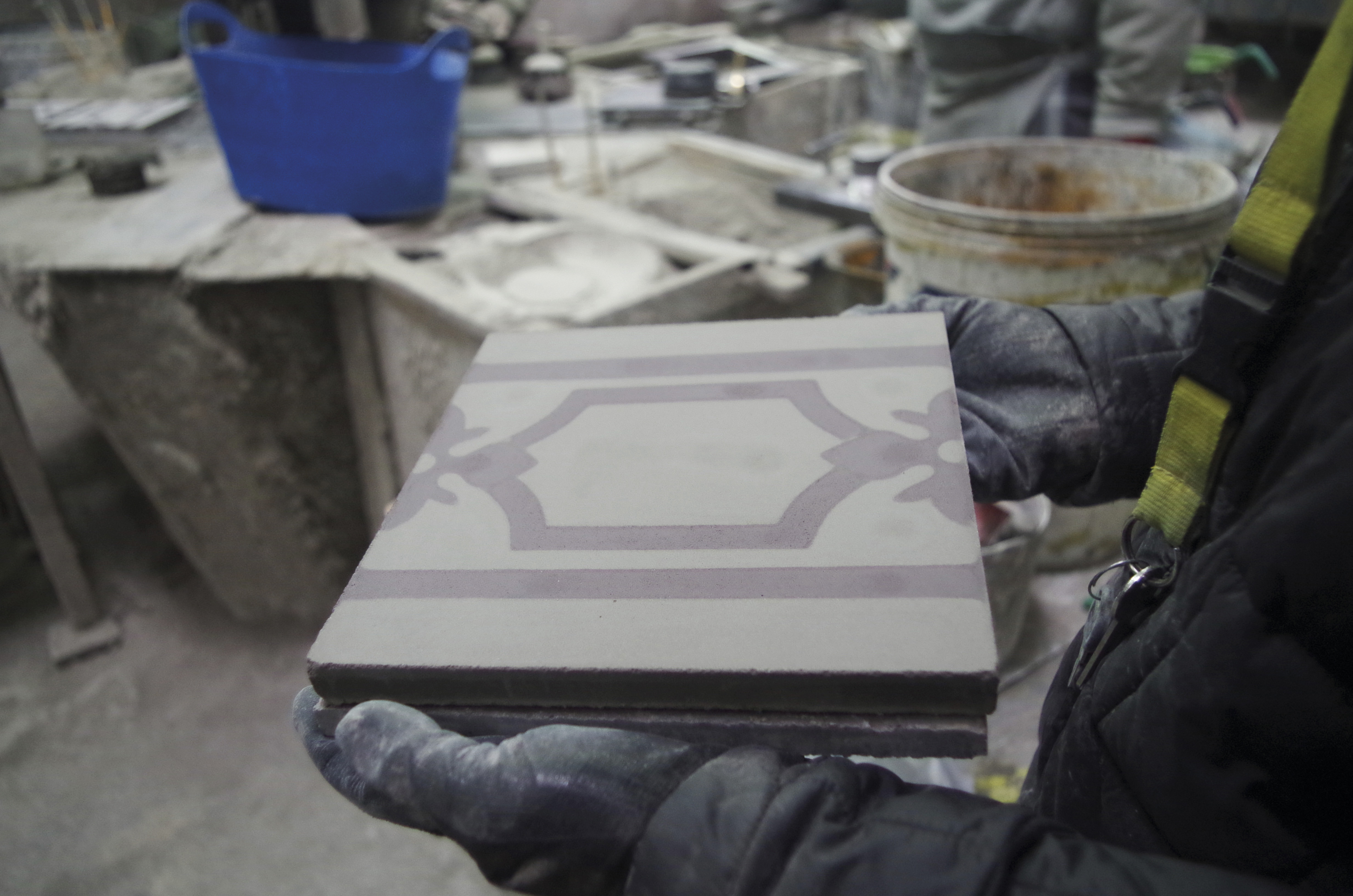
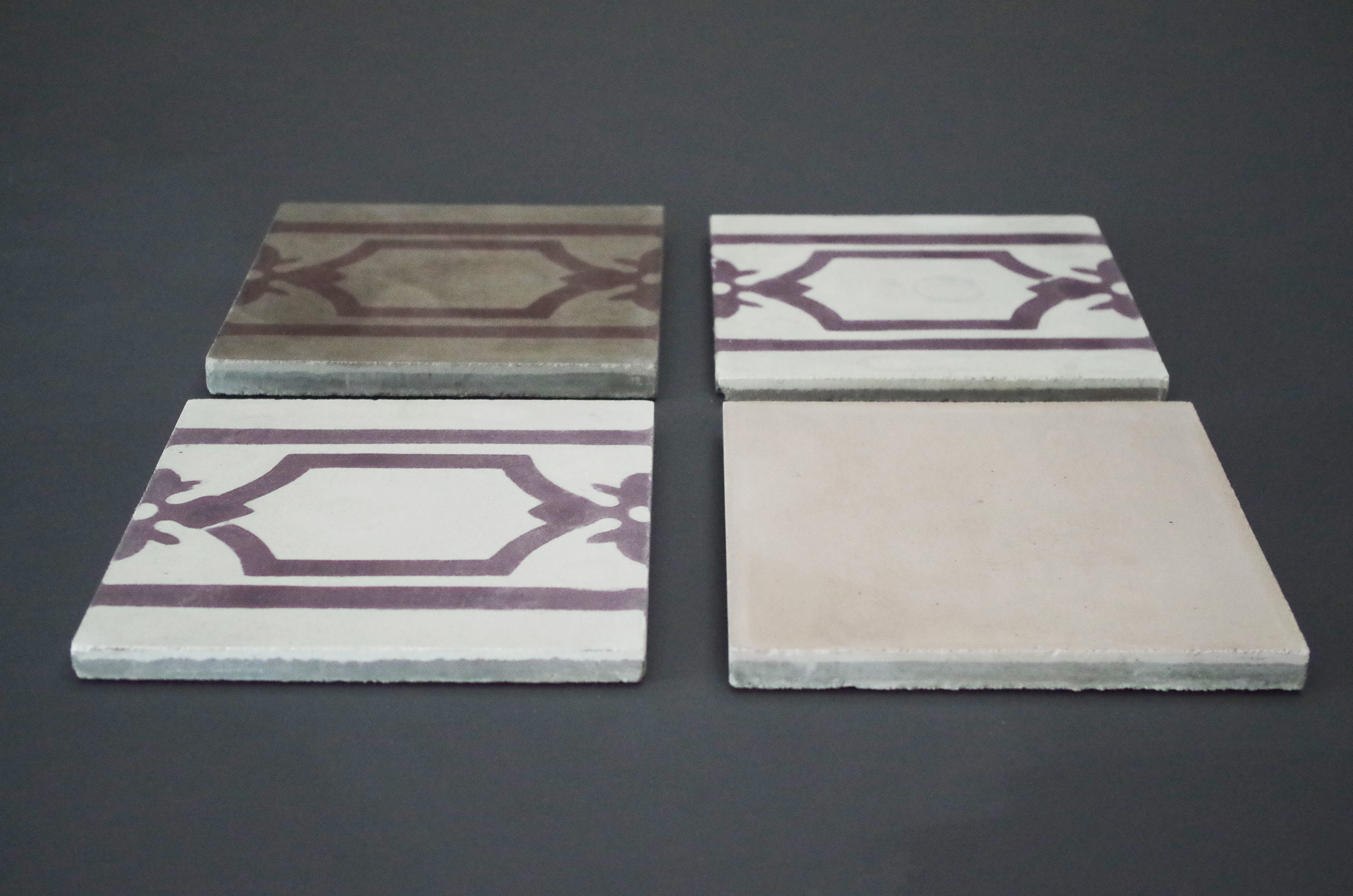
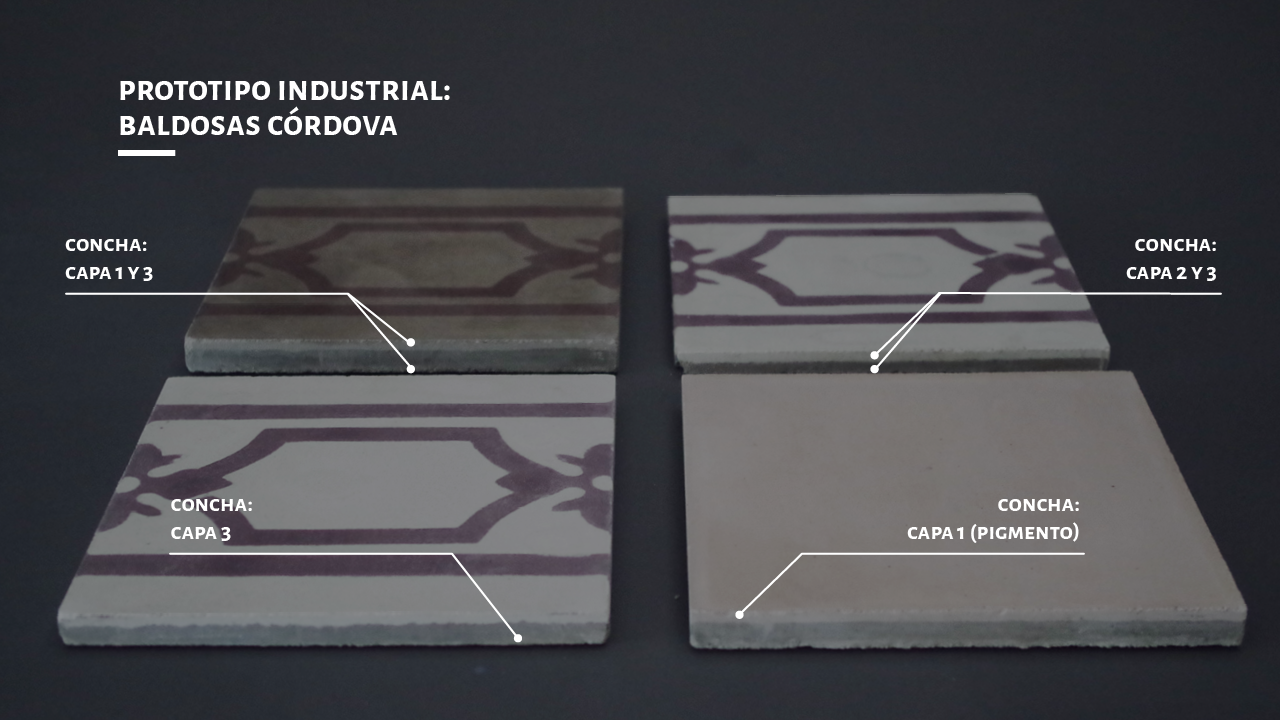
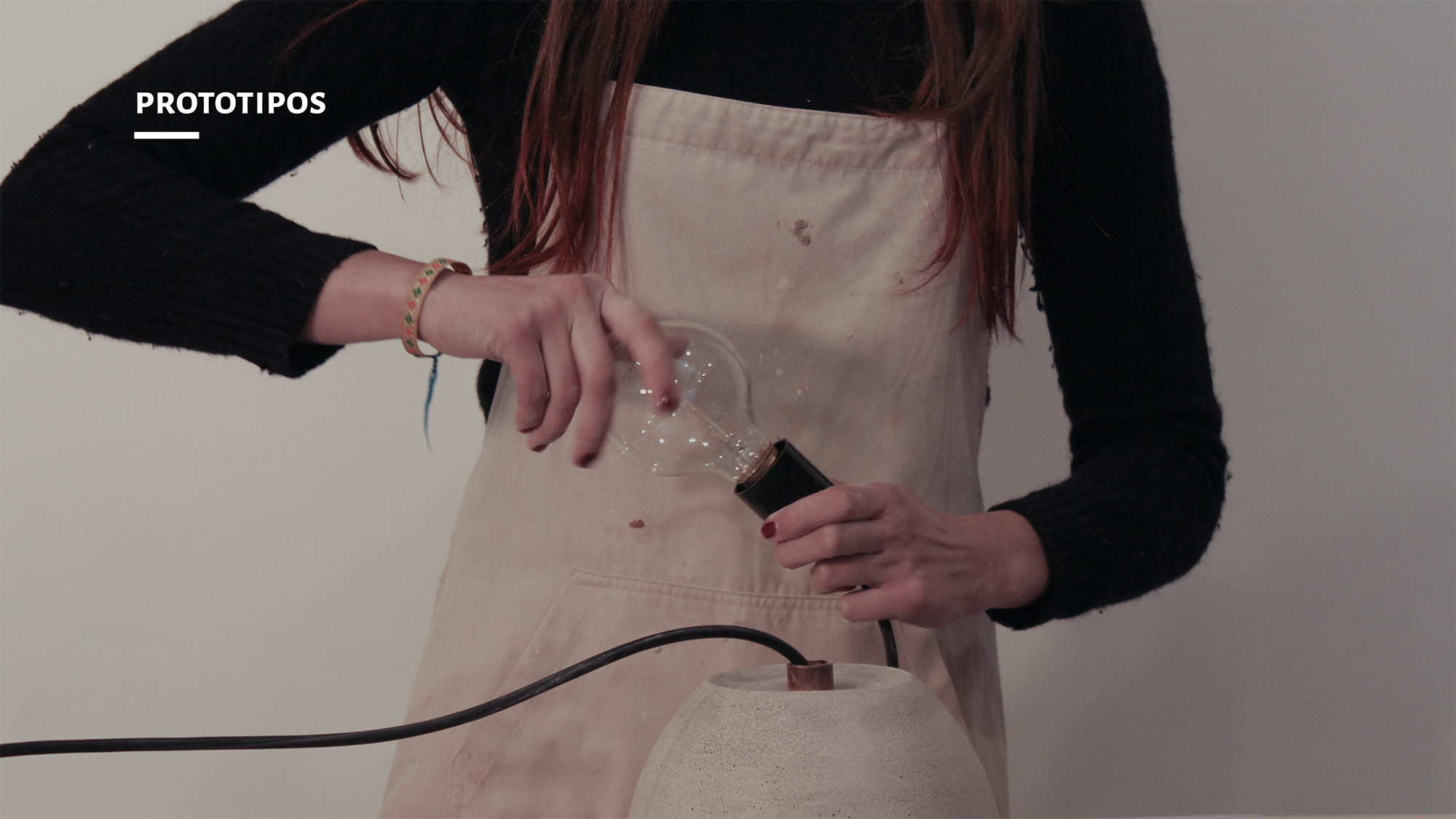
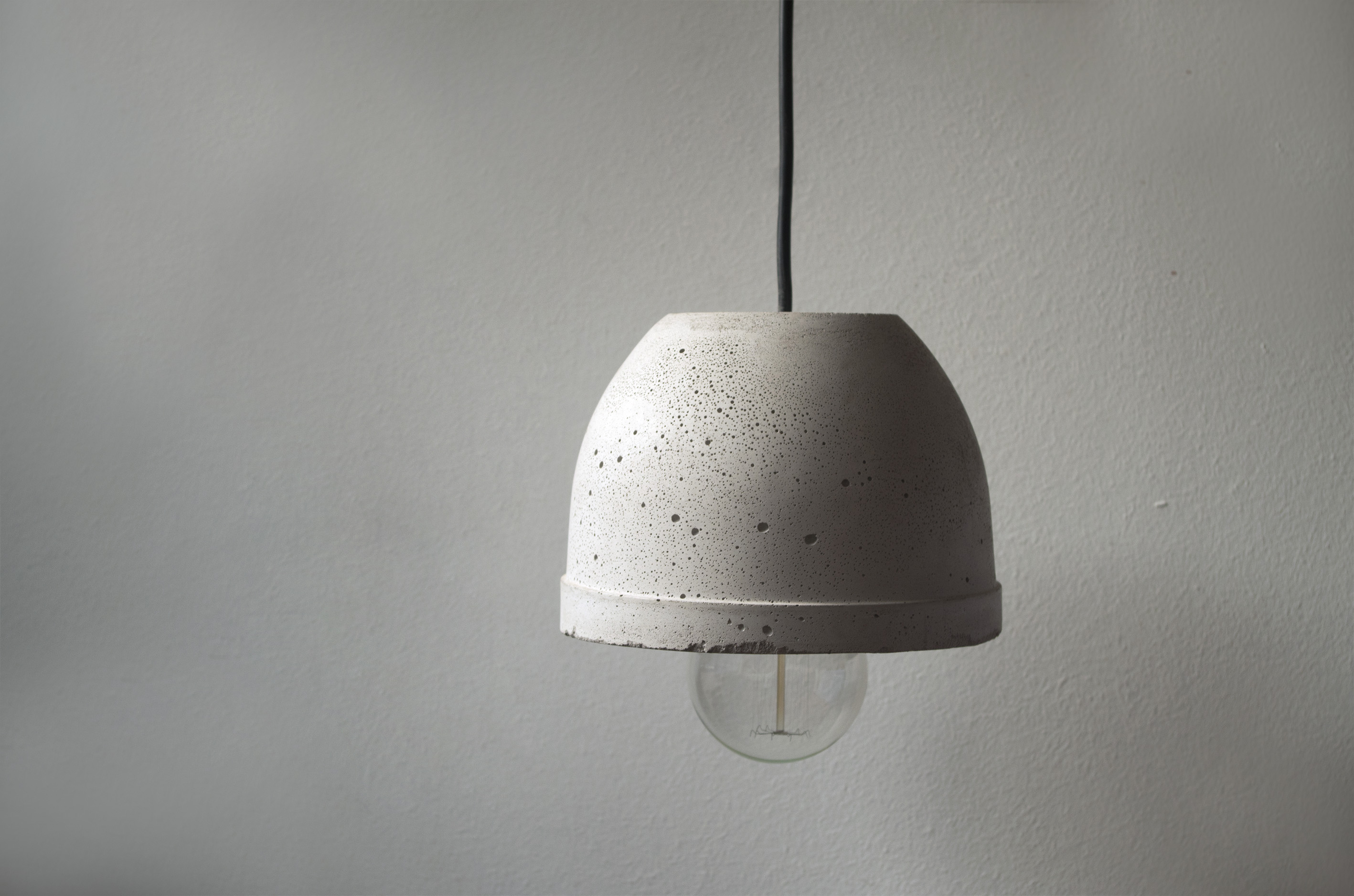
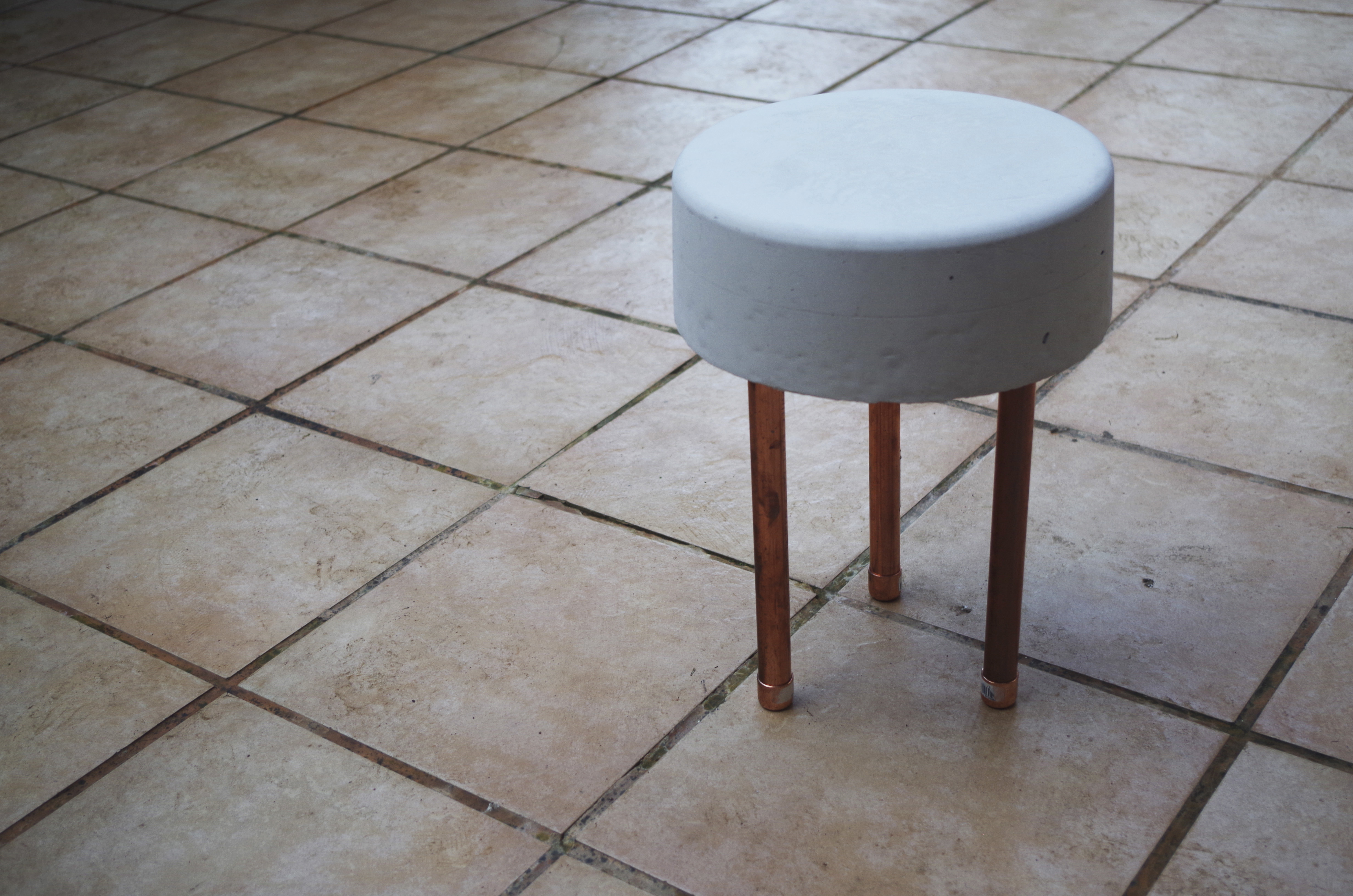
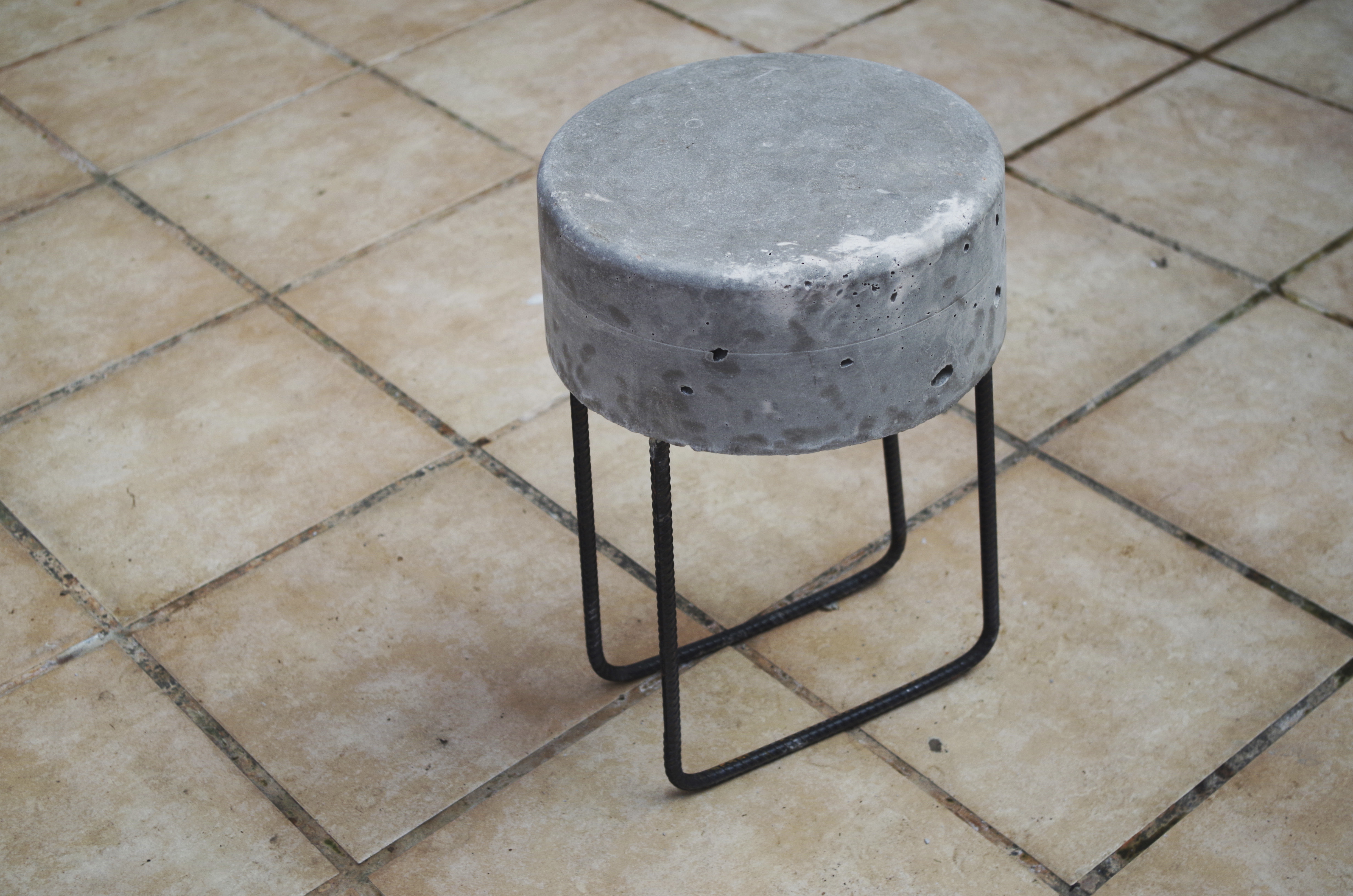
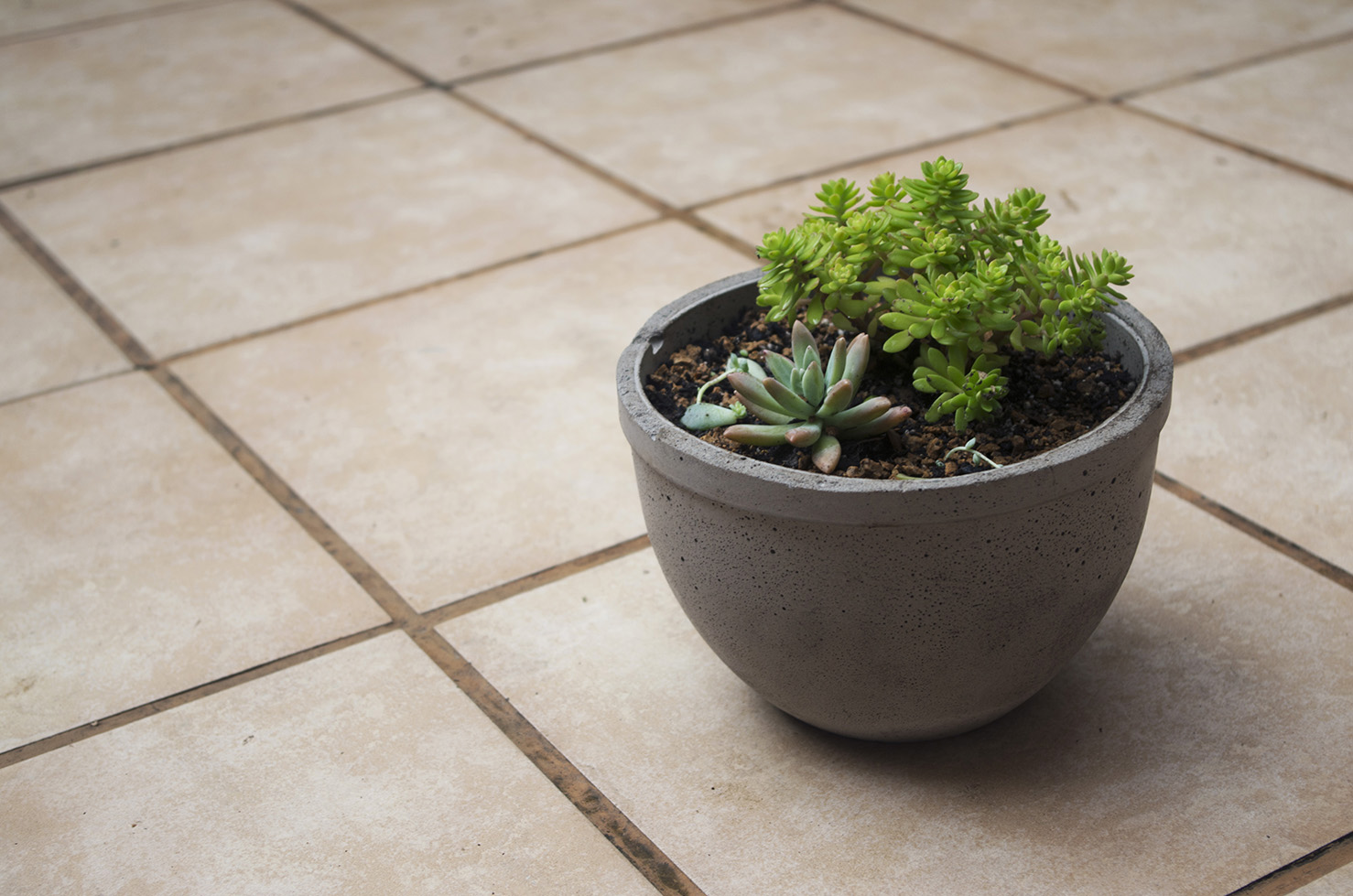
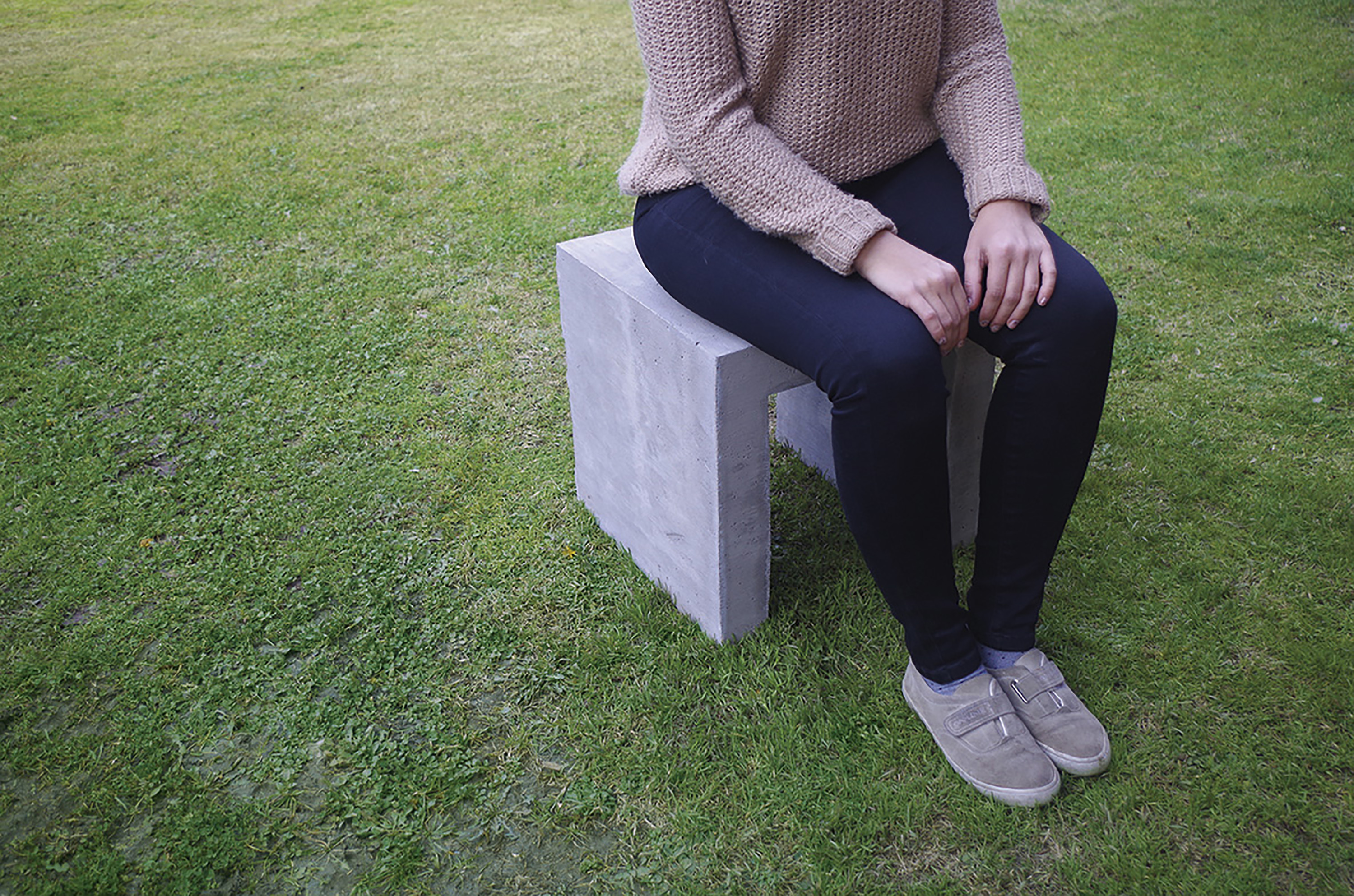
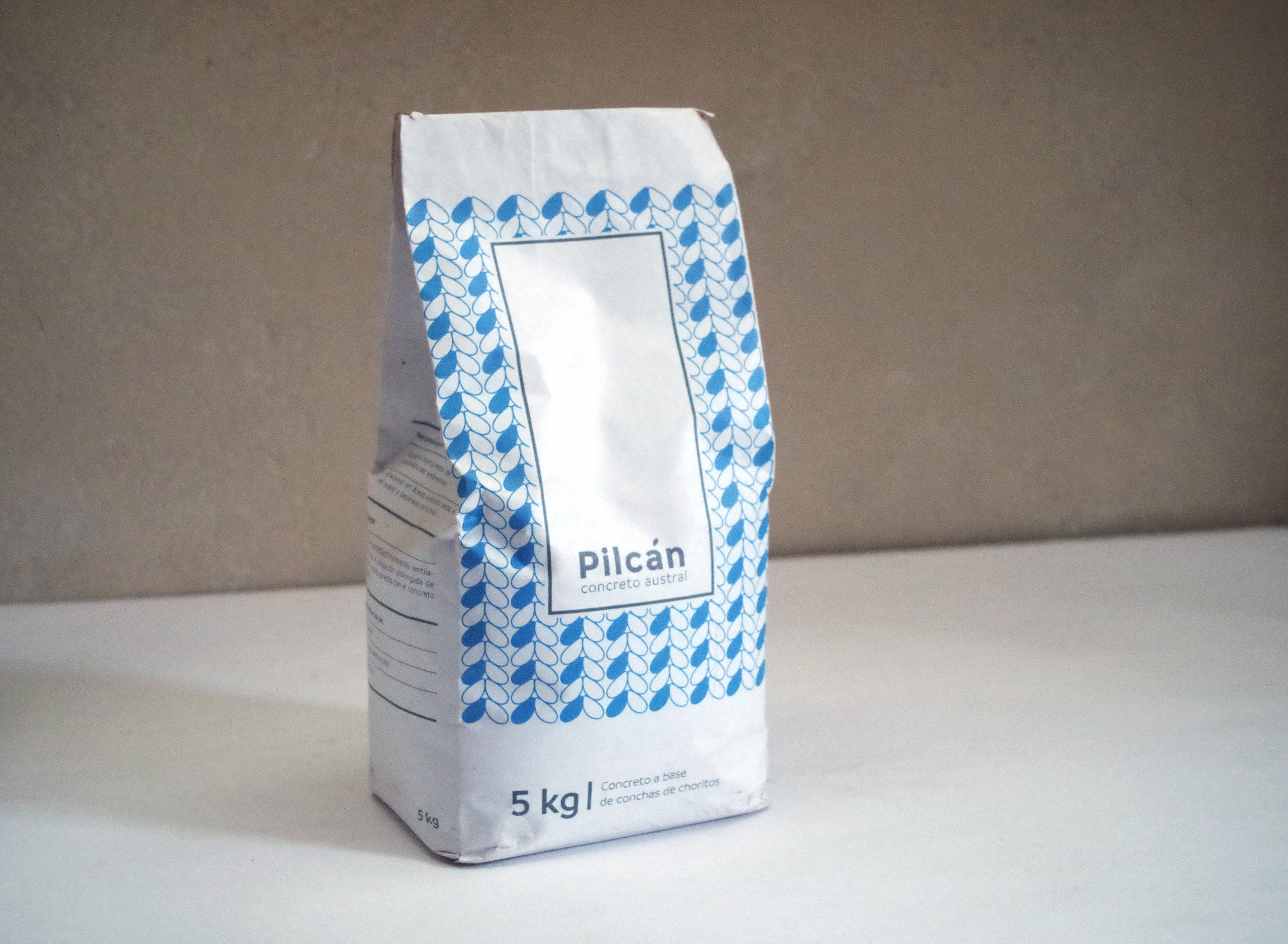
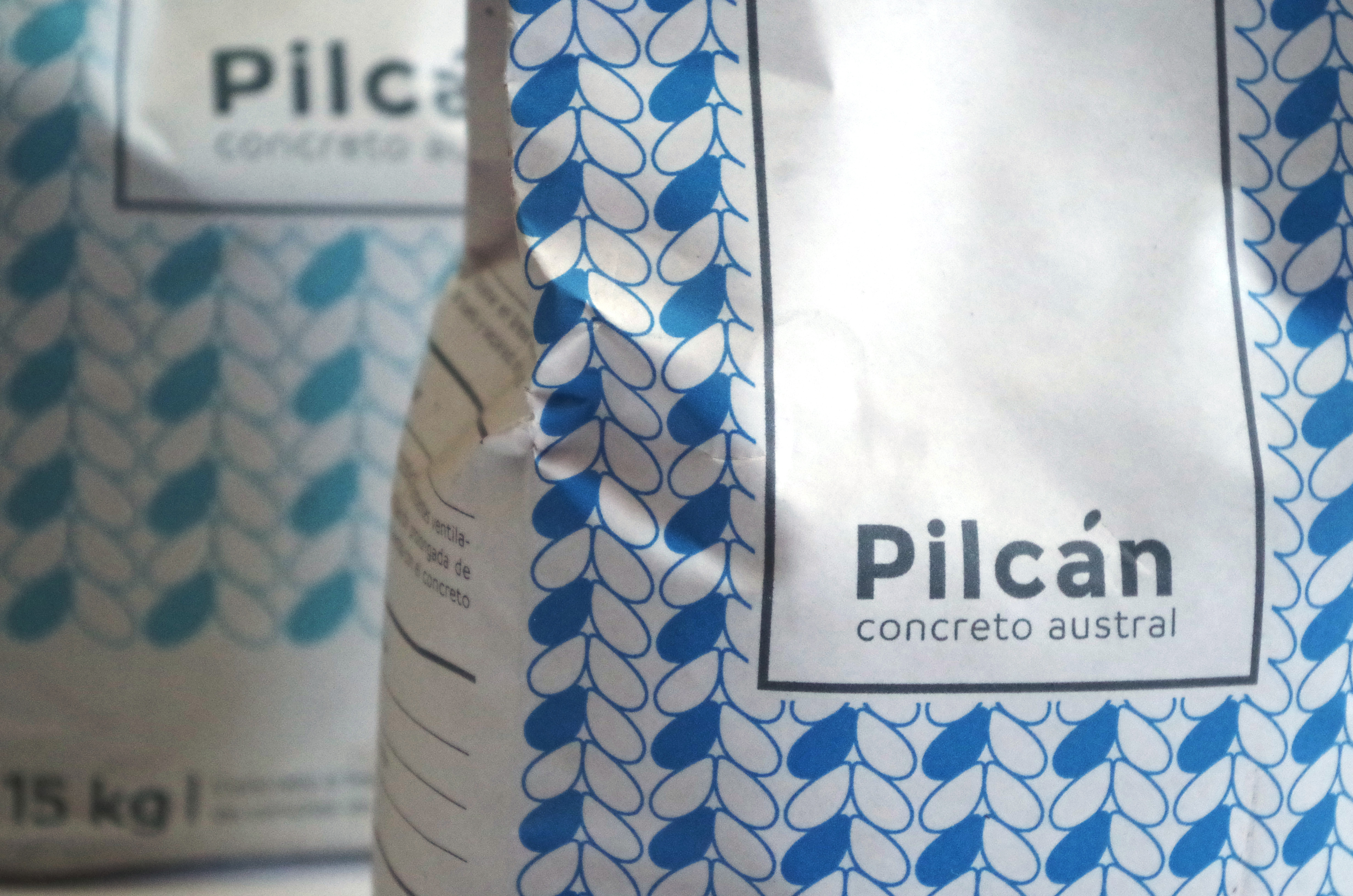
The material generated was tested in an hydraulic tile factory, obtaining favorable results, which allowed to verify and validate the use of the material on an industrial scale. To explore possible uses of the material, furniture, pots and lamps were developed, achieving positive results. The final product consisted of a package of Pilcán with instructions for building objects from scratch, using an environmentally friendly material. Pilcán was my undergraduate thesis project and was qualified with the maximum attainable grade.
By developing Pilcán, a mussel-based concrete which partially replaces cement in the mixture, I aimed at producing a more sustainable construction material. Through axial load testing, I developed several different mixtures to check the maximum amount of shells the material could have, according to resistance standards. My purpose was to generate a material with the lowest possible carbon footprint.
The material generated was tested in an hydraulic tile factory, obtaining favorable results, which allowed to verify and validate the use of the material on an industrial scale. To explore possible uses of the material, furniture, pots and lamps were developed, achieving positive results. The final product consisted of a package of Pilcán with instructions for building objects from scratch, using an environmentally friendly material. Pilcán was my undergraduate thesis project and was qualified with the maximum attainable grade.






SILENT INHABITANTS
Multispecies Ethnography of Urban Microalgae
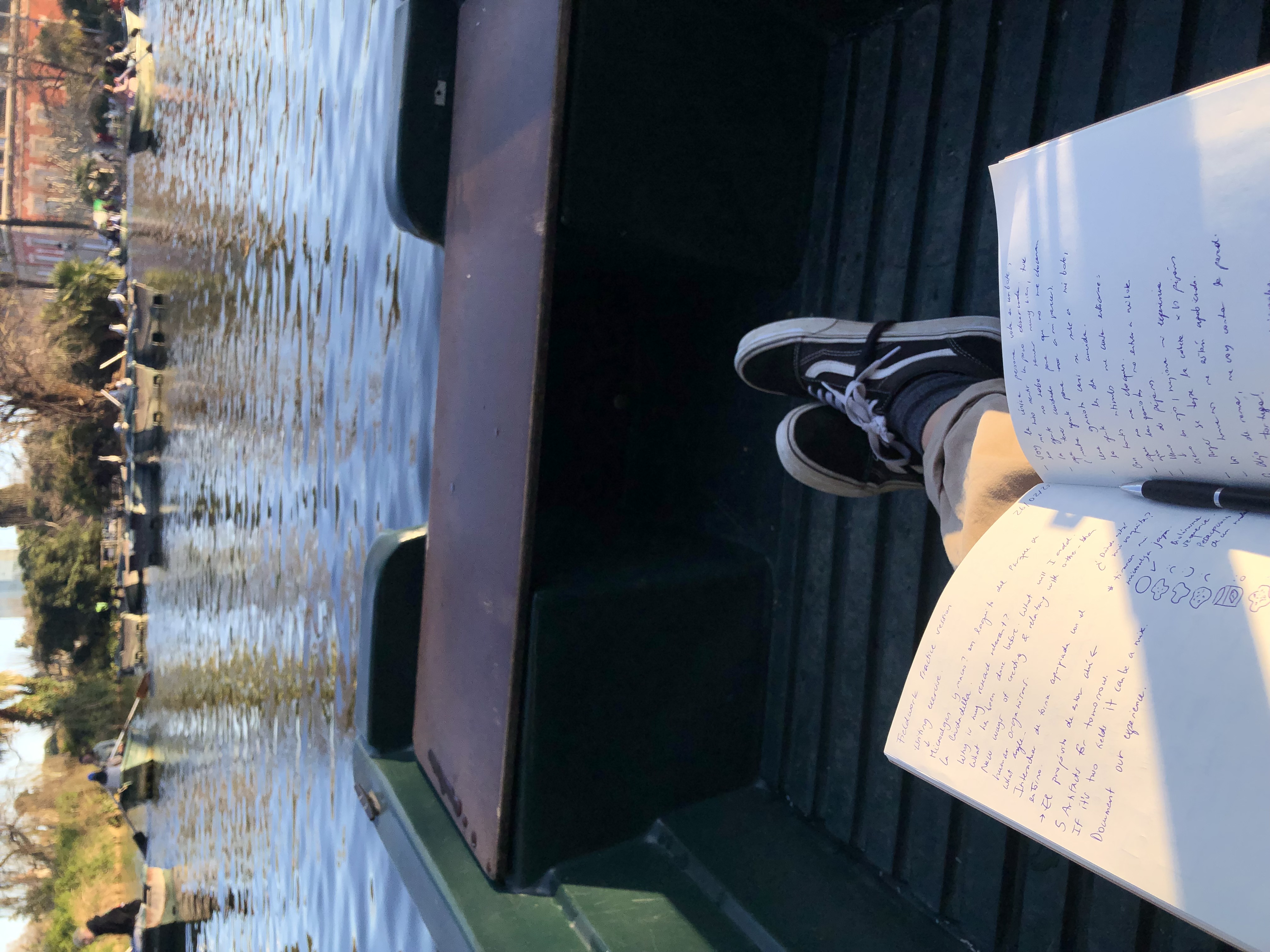
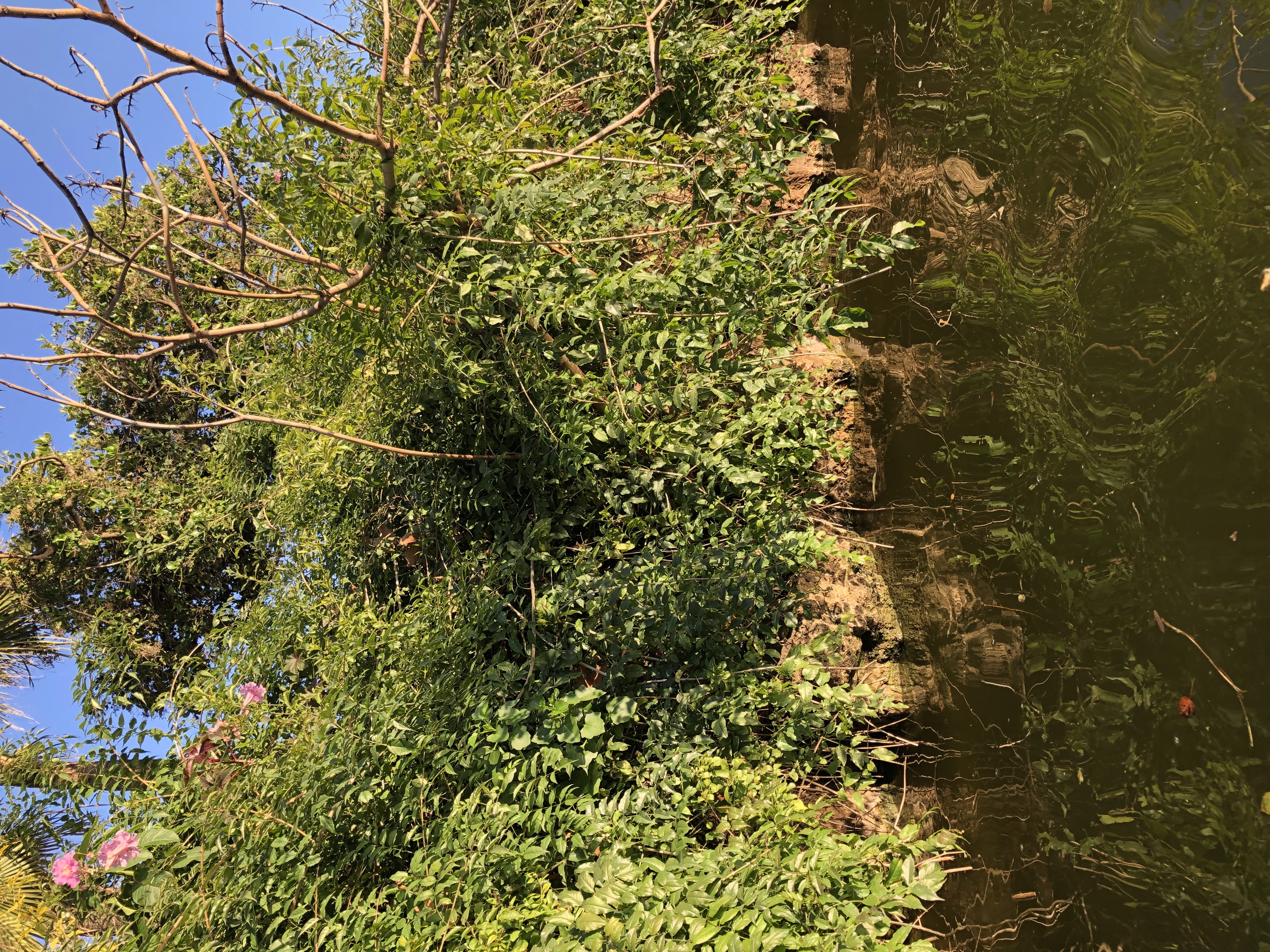
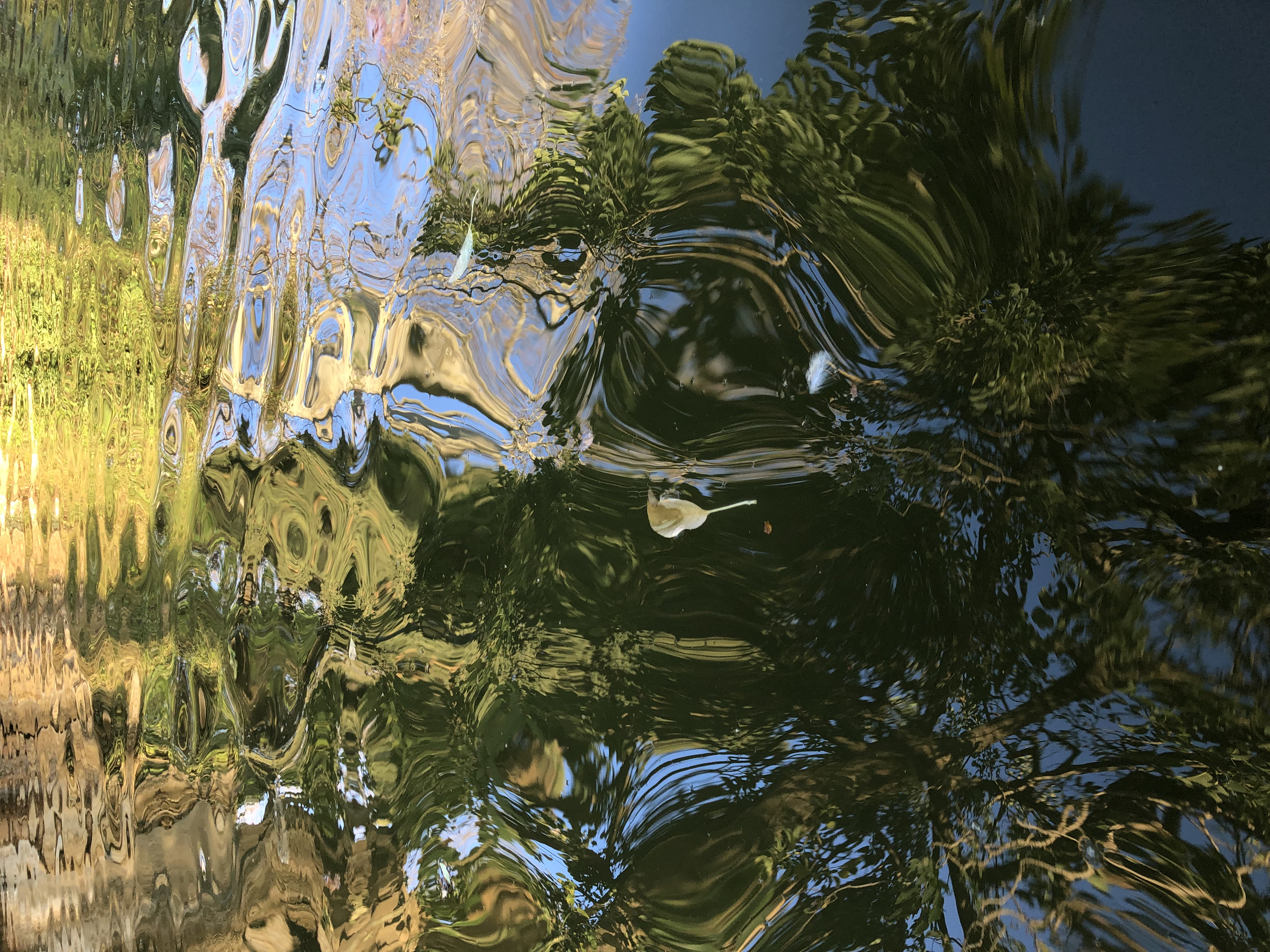
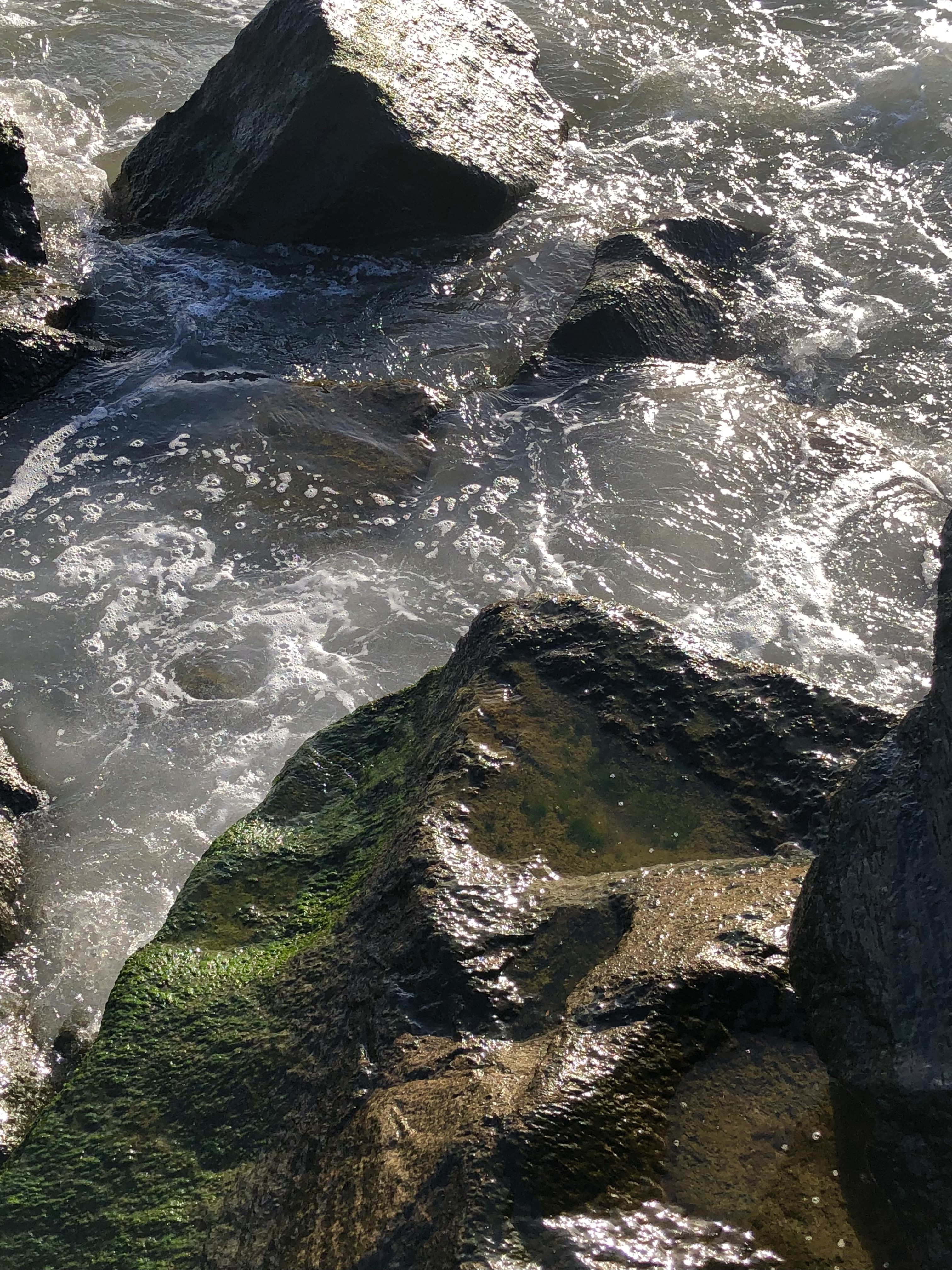
Silent Inhabitants is an ethnographic exploration of microalgae within the urban environment of Barcelona. Conducted in Ciutadella Park and Bogatell Beach, the research observes how these microorganisms inhabit the city and interact—often invisibly—with human and non-human dynamics.
Framed within posthumanist and multispecies ethnography, the project places non-human life at the center of analysis, questioning anthropocentric views and examining how different species co-create shared worlds. Field observations revealed the adaptability of microalgae to diverse conditions and invited reflections on human presence: movements such as rowing in the lake may unintentionally influence algal growth, highlighting the intertwined nature of urban ecologies.
The project raises questions about visibility, awareness, and design: Can making microalgae perceptible foster new forms of environmental sensitivity? How might design engage with non-human agents as collaborators rather than resources? Ultimately, Silent Inhabitants proposes a shift toward relational and ecological thinking—inviting us to reconsider our coexistence with the often overlooked life forms that quietly sustain the urban landscape.
Framed within posthumanist and multispecies ethnography, the project places non-human life at the center of analysis, questioning anthropocentric views and examining how different species co-create shared worlds. Field observations revealed the adaptability of microalgae to diverse conditions and invited reflections on human presence: movements such as rowing in the lake may unintentionally influence algal growth, highlighting the intertwined nature of urban ecologies.
The project raises questions about visibility, awareness, and design: Can making microalgae perceptible foster new forms of environmental sensitivity? How might design engage with non-human agents as collaborators rather than resources? Ultimately, Silent Inhabitants proposes a shift toward relational and ecological thinking—inviting us to reconsider our coexistence with the often overlooked life forms that quietly sustain the urban landscape.